Spanish e-Invoicing: Factura Electrónica vs Verifactu Explained
Discover the differences between Verifactu and Factura Electrónica and choose the right e-invoicing system for Spain.

In the world of electronic invoicing, it is common to find confusion between two terms that, although related, perform very different functions: Verifactu and Factura Electrónica (also known as Factura-e). Both are associated with the use of e-invoicing software, but their applications, objectives and scope are not the same.
Below, we explain clearly and simply the differences between Verifactu and Factura Electrónica. This Factura Electrónica vs Verifactu comparison will help you identify which system best fits your needs and how to stay up to date with Spanish tax regulations.
What is Factura Electrónica and what is it for?
Factura Electrónica (or Factura-e) is the official Spanish digital invoice format used to issue electronic invoices to Public Administrations. It was created by the Spanish Government to make it easier to receive and automatically process tax documents in a structured XML format. So if you work with public entities, you need Factura-e software that complies with this standard.
What do you need to use Factura Electrónica?
- Invoicing software that generates documents in Factura-e (XML) format.
- A digital certificate to electronically sign the invoices.
- Submission through the State’s FACe platform (the official Spanish e-invoicing entry point for B2G).
This e-invoicing system has been mandatory since 2015 for public sector suppliers. However, many companies also use it to standardise their internal processes.
What is Verifactu and how is it different?
On the other hand, Verifactu is an electronic invoicing system driven by the Spanish tax agency (AEAT) whose purpose is to control invoice issuance in real time for self-employed professionals and companies.
With Verifactu, the goal is not only to issue a digital invoice but to guarantee that the data cannot be altered and is immediately accessible to the tax authorities. This translates into greater traceability and the impossibility of modifying invoices once issued, which strengthens the fight against tax fraud.
Verifactu key points:
- The invoicing software must be adapted or certified according to AEAT regulations.
- The system enables the automatic submission of invoicing records to the tax authorities.
- It will be rolled out progressively and become mandatory once the new regulation enters into force.
Key differences
Although both terms are tied to the use of e-invoicing software, the differences between Factura Electrónica vs Verifactu are notable and respond to very different needs within the electronic invoicing process:
| Feature | Factura Electrónica | Verifactu |
|---|---|---|
| Purpose | Issue invoices to Public Administration | Guarantee traceability and fiscal control |
| Legal obligation | Mandatory for public sector suppliers | Will be mandatory for all issuers under the Anti-Fraud Law |
| Format | Structured XML and XSIG, digitally signed | Digital record with traceability connected to AEAT |
| Platform | Submission through FACe | Direct connection with the tax agency |
| Target audience | Companies invoicing Public Administrations | Self-employed and companies across all sectors |
Which invoicing software do I need?
Choosing the right invoicing software mainly depends on whom you address your invoices to and how you want to manage your tax obligations. In the Factura Electrónica vs Verifactu debate, the key is to understand whether you need to issue invoices for Public Administrations or guarantee the traceability required by the tax agency. If you work with Public Administrations, you are required to use Factura-e software that generates invoices in the official XML format. But if you also issue invoices to private clients and want to get ahead of AEAT requirements, the smart move is to adopt an e-invoicing system compatible with Verifactu from day one.
That is why the ideal approach is to rely on a tool that unifies both functions. And this is where dvfactura-e makes the difference: it is an e-invoicing software that integrates both Factura Electrónica and Verifactu in a single system. With dvfactura-e you can:
- Issue valid digital invoices for Public Administrations and submit them through FACe with no friction.
- Comply with Verifactu e-invoicing standards, ensuring the traceability and integrity required by the tax authorities.
- Automate processes, reduce errors and save time in your accounting work.
In short, if you are looking for invoicing software that prepares you for the present and the future, dvfactura-e is the tool your company needs. Whether you work with the public sector, the private sector or both, you will be covered with a reliable, complete and always up-to-date solution.
At Davisa we already have the solution
At Davisa, we are ready to help you adapt to the new era of electronic invoicing. Our dvfactura-e invoicing software complies with Verifactu requirements and also generates invoices in the Factura Electrónica format, so you have everything you need in a single tool.
Do not wait until it is mandatory: automate, protect your data and keep your business compliant from today. If you are looking for a comprehensive and reliable solution, at Davisa we are ready for you.
Ready to comply with Factura Electrónica and Verifactu without surprises?
If you want to unify Factura Electrónica (B2G) and Verifactu (AEAT control) into a single native Business Central extension, with no external connectors and no duplicated tools, talk to a Davisa advisor about dvfactura-e — 30 minutes, no commitment.
Artículos relacionados
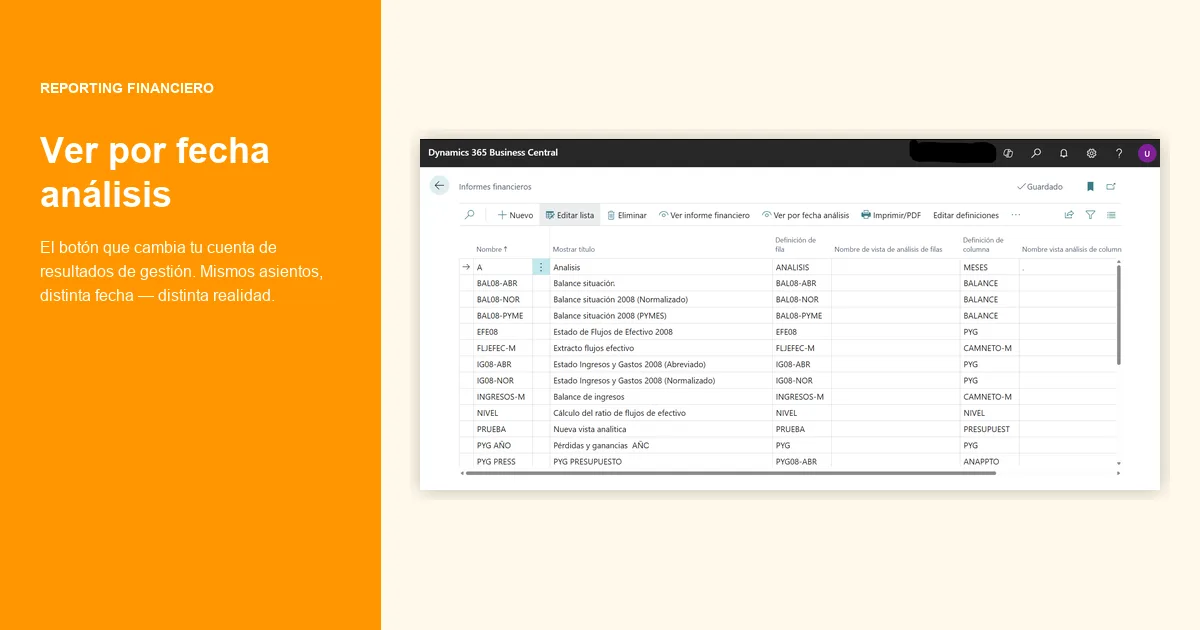
Accrual vs Invoice-based P&L Reporting in Business Central
Accrual vs invoice date in the monthly P&L: numerical examples of how monthly margins shift depending on which closing criterion you use.
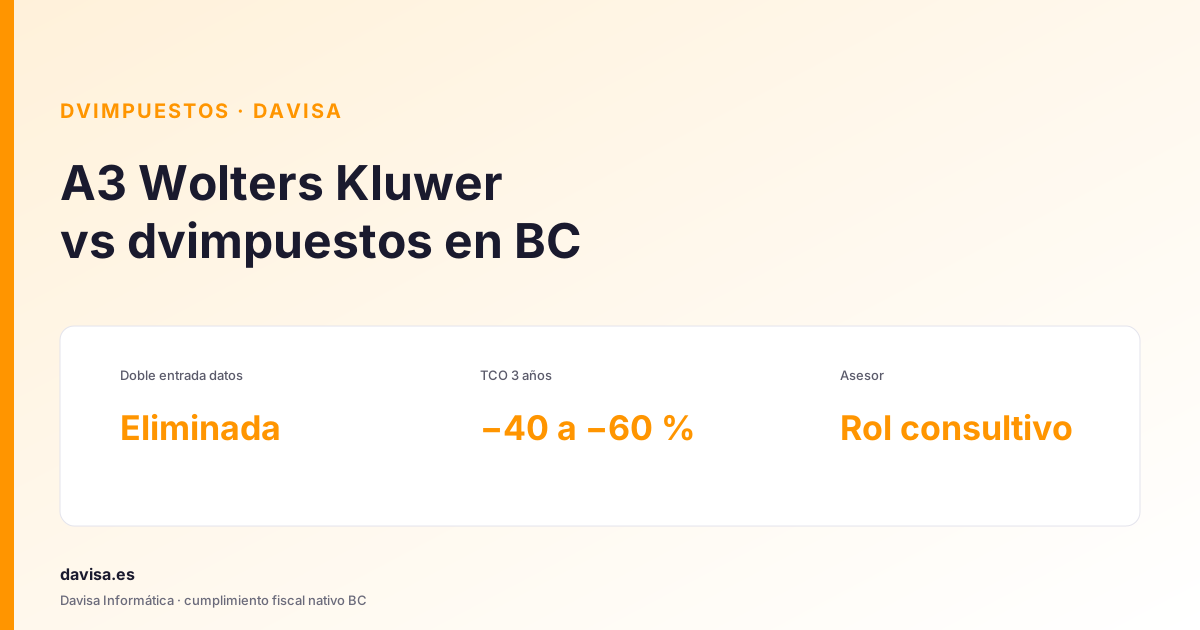
A3 Wolters Kluwer vs dvimpuestos: Tax Compliance in BC
A3 Wolters Kluwer vs dvimpuestos: when to stay with the external tax advisor and when to unify Spanish tax compliance inside Business Central.
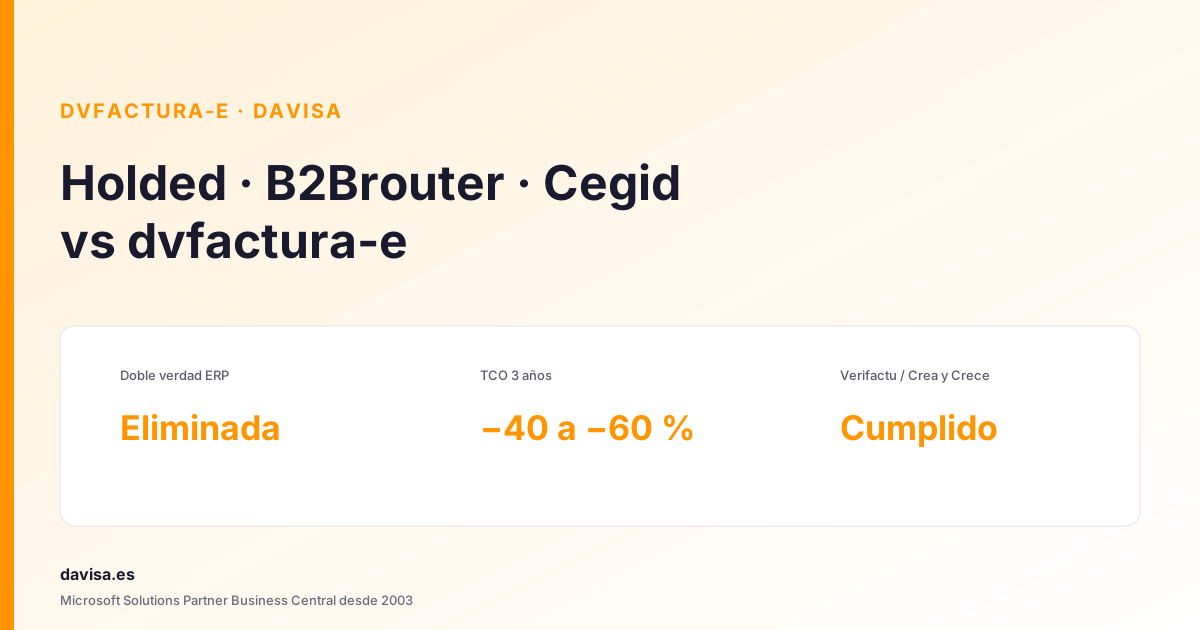
Holded, B2BRouter & Cegid vs dvfactura-e in Business Central
E-invoicing platforms compared: Holded, B2BRouter, Cegid, EDICOM vs dvfactura-e, the native Business Central option for Spain compliance.