
B2C E-commerce dvcommerce Integrated with Your ERP
B2C e-commerce dvcommerce natively integrated with your ERP if you work with Microsoft Dynamics 365 Business Central, NAVISION or NAV.

Integrated with your ERP Dynamics 365 Business Central
Online selling to the end consumer
What is B2C E-commerce dvcommerce?
The e-commerce platform fully integrated with your sales system/ERP for online selling of products or services, focused on companies oriented to the end user.
The differential advantage this tool brings is that it works natively integrated with Microsoft Dynamics 365 Business Central, while also allowing connection to any other ERP on the market.
Benefits for the company — dvcommerce B2C
- Increases business opportunities by reaching a wider market thanks to B2C e-commerce.
- Encourages cross-selling of related products or recommendations from the user.
- Greater control and reliability of the information, avoiding human error.
- Allows sales strategies focused on improving the buyer’s experience with your brand, product or service, in order to increase sales.
- Provides the company with real-time data to optimise inventory and reduce order preparation time and other logistics costs.
- Improves your online reputation.
Benefits for the customer — dvcommerce B2C
- 24/7 service, 365 days a year, which means higher service.
- More information about products, giving the user greater confidence.
- Convenient, since it can be accessed from any device and place, avoiding unnecessary trips.
- Possibility to recommend products to colleagues and friends.
- User registration gives access to offers, points and other benefits that bring the customer closer to the brand.
- Allows the user to stay up to date on news and the latest trends.

Product catalogue:
- Search engine
- Product listing
- Product card (features, available stock, etc.)
Order management:
- Add to cart
- View cart
- Check out
- Access to payment gateway
Customer area:
- History: invoices, previous orders, wish list, etc.
- Loyalty programme: points system, etc.
The best way to enjoy a B2C system fully integrated with your ERP
Native real-time integration with the ERP Microsoft Dynamics 365 Business Central
Positive effects for users of Microsoft Dynamics 365 Business Central dvcommerce, such as:
-
Orders are reflected in real time, so delivery lead times are far more agile.
-
Stock available on the web is always up to date.
dvcommerce B2C with the entire Microsoft ecosystem
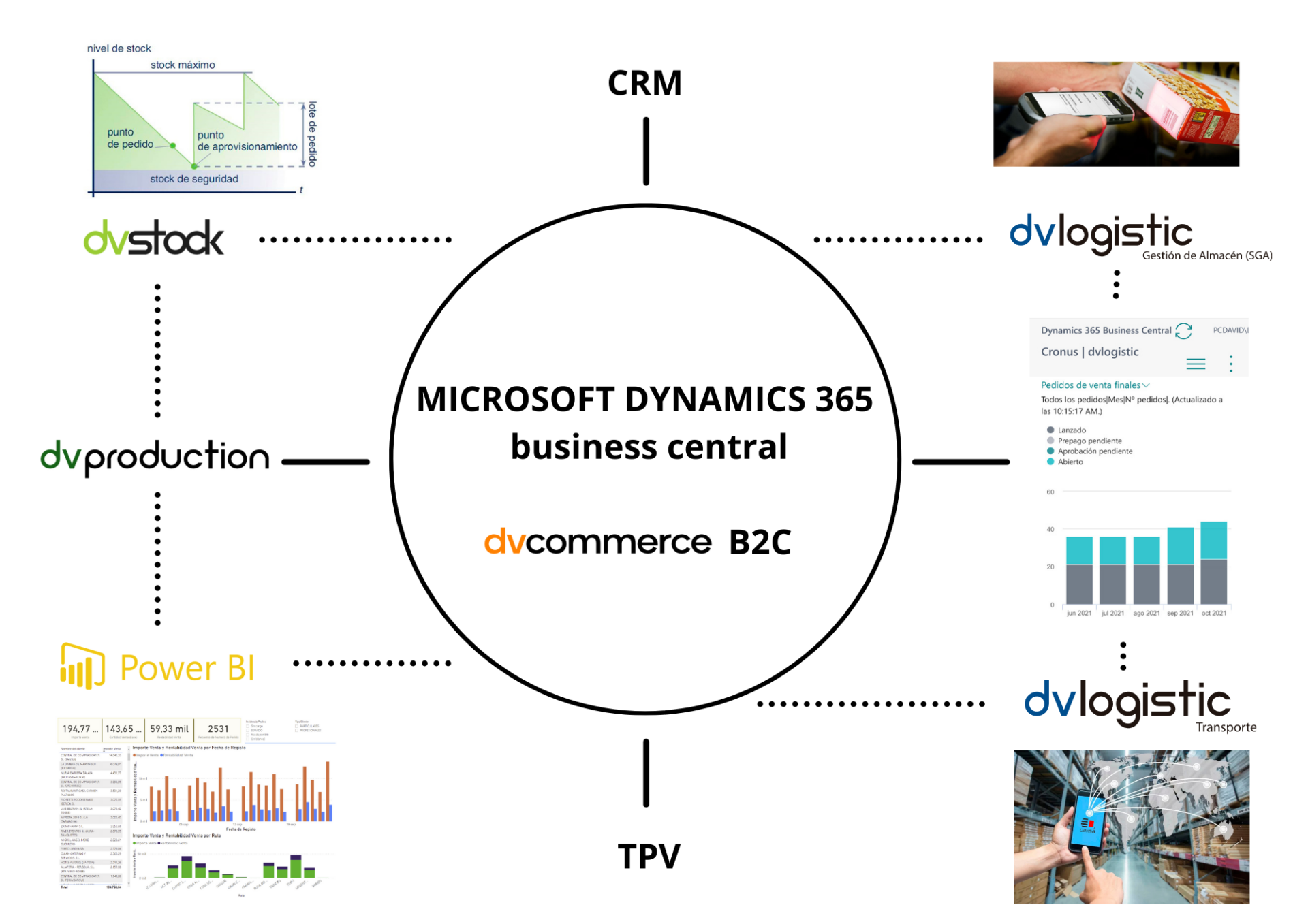
Integrable with other tools inside the Microsoft ecosystem, whether Davisa products such as:
-
ERP dvproduction
-
dvstock
-
ERP dvlogistic WMS
-
ERP dvlogistic for transport
-
POS
-
Power BI
-
Microsoft CRM
-
Other tools:
-
Common Data Service
-
Data Connectors
-
AI Builders
- …
-
Omnichannel
Configurable to bring the e-commerce platform closer to the customer profile.
Bidirectional
The entire platform is configured from the ERP.
-
Products
-
Available stock
-
Descriptions
-
Photographs
-
SEO/SEM positioning
- …
dvcommerce B2C and B2B
Works as B2B and B2C if required.
Marketing
You can tailor the items recommended according to each customer’s profile, or run loyalty campaigns.
Customer area
Users of dvcommerce B2C have the exclusive customer area where, through customer registration, you will have access to, among other things:
-
History
-
Recent orders
-
Order status
-
Invoices
-
Warranty management
-
Returns
- …
All this information will be vital at an analytical level for the marketing and sales department. With special relevance during launches of other products and even being able to combine this information with artificial intelligence inside Microsoft Dynamics 365 Business Central.
More digital experiences
You will be able to work with information directly connected to your social networks, mobile devices and micro-applications. This way, your company will boost its commercial processes intelligently and more effectively.
Unification of all business processes
Native real-time connection, while always respecting the philosophy of the company and the reference business.
Request a dvcommerce demo
dvcommerce is an extension of Microsoft Dynamics 365 Business Central
It allows you to connect your entire team under the same ERP.
Boost sales with a global solution in the format you choose: cloud, owned or hybrid. Connect your sales, design, planning, purchasing, operations, warehouse, after-sales and/or technical service teams under a common objective.
What changes between a stand-alone B2C e-commerce and one integrated in BC
Most B2C online stores in Spain live on Shopify, WooCommerce or PrestaShop, synchronised with the ERP by nightly jobs. It works — until it stops working:
- Outdated stock: the ERP says 5, the web says 12, eight are sold. Overselling, angry customer, return.
- Inconsistent prices: a promotion runs “until Sunday” on the web but the ERP invoices the base price.
- Lost orders: the connector fails, the orders from the last shift don’t reach the ERP, the orders are rewritten by hand.
- Hellish bank reconciliation: payments arrive at the bank, orders at the ERP, but nothing links them — the accountant reconciles by hand.
dvcommerce B2C natively integrated in BC eliminates these four structural problems. The stock the customer sees on the web is the real BC stock at that second. The promotion BC applies applies to the cart. The Redsys payment is automatically posted on the customer’s account. Bank reconciliation matches the bank charge with the invoice issued.
For a B2C invoicing 500 to 5,000 orders a month, this isn’t an “improvement” — it is what separates a sustainable operation from a burnt-out admin team.
Technical SEO in dvcommerce: what is built in
A B2C e-commerce that doesn’t appear on Google doesn’t sell. dvcommerce integrates out of the box the technical capabilities Google evaluates in 2026:
- Friendly and permanent URLs:
/category/product-name/instead of/index.php?id=123. If a product is renamed, an automatic 301 redirect is created. - Dynamic sitemap.xml: updated instantly with every catalogue change, submitted to Search Console.
- Schema.org structured data: Product, Offer, BreadcrumbList, FAQ, Review. Every card is rendered with JSON-LD markup that Google understands.
- Optimised Core Web Vitals: image lazy-loading, WebP/AVIF with fallback, CDN for static files, server-side rendering for critical cards.
- Server-side rendering: the catalogue is served rendered, not built by JS on the client. Google indexes fast, pages weigh less.
- HTTPS, robots.txt, canonical, hreflang if there are several languages/countries. All configured by default.
This isn’t achieved by “installing an SEO plugin” on Shopify. The platform brings it by design.
Spanish payment gateways in 2026: what you need to know
The Spanish gateway market in 2026 is dominated by:
- Redsys: the default banking gateway in Spain. Compatible with all national banks.
- Bizum: fast mobile payments, increasingly demanded especially in young B2C.
- Stripe: international standard, recommended if you sell outside Spain.
- PayPal: residual but still demanded by older users.
- Aplazame / Sequra: consumer financing, key for high-ticket items (>EUR 200).
dvcommerce integrates them all out of the box with automatic posting in BC: each incoming Redsys payment generates an entry on the customer’s account and is reconciled with the bank statement that arrives the next day. What in a stand-alone store is administrative work, here is an automatic flow.
Common mistakes at B2C launch (and how to avoid them)
As a Microsoft MSP on BC since 2003 and with experience in e-commerce since the initial integration between NAV and online stores, Davisa identifies recurring mistakes:
- Launching without a clear success metric. Orders on day 1, yes — but also conversion rate, average ticket, cart abandonment. Without Power BI on BC, it isn’t measured.
- Under-sized logistics. The web may sell 200 orders/day — but if your picking only prepares 50, they jam in the warehouse. Review shipping capacity before a campaign.
- Not testing gateways in production. Gateways have their own test mode; moving to production requires specific validations. Do a real test with a card before the launch, not on the first real order.
- Returns without a process. B2C has returns (15-25% in fashion, 5-10% in other sectors). Without a clear return flow integrated in BC, parcels pile up unprocessed and customers get angry.
Integrated POS: the natural complement to B2C in physical stores
Many B2C operations start online and end up opening a physical store (factory outlet, showroom, retail). When that moment arrives, the temptation is to buy a generic POS and “sync” it with BC. Bad idea: out-of-sync stock, manual reconciliations, duplicated customers, cash-up closures that don’t match.
dvcommerce POS is the native point of sale on Business Central — the same layer as your online store, with an interface designed for the counter. What it brings:
- Real-time sync of stock, customers, items and prices between physical store, e-commerce and central warehouse. Single stock.
- Automatic posting of every sale, return and cash movement. The daily cash-up produces the entry in BC.
- Five deployment modes: stand-alone POS (one station), networked (several stations in one store), multiple stores with several stations, chain connected to a central, and full integration with the ERP.
- Multi-everything: multi-company, multi-store, multi-till, multi-seller, multi-warehouse, multi-currency.
- Fast checkout experience: barcode scanning, discounts, vouchers, automatic promotions, modern payment methods (contactless, mobile, financing), simplified and full invoices.
- Loyalty programmes integrated with CRM: customer history accessible from the till, points, coupons, segmentations.
- Legal compliance: Verifactu, TicketBAI (Basque Country), B2B e-invoicing. Legal issuance is handled by BC, not the POS.
- Standard hardware: cash drawer, thermal printer, barcode reader, scales, pinpad.
Typical cases: multi-store retail with a central back office, factory outlet from an industrial company (lot traceability all the way to the ticket), hospitality with order and table, cash and carry, specialised retail (sports, hardware, bookshop).
Typical day in a store with dvcommerce: in the morning the manager opens the till with their user and a known float; the first seller logs in with their PIN; the POS identifies the customer and suggests an automatic loyalty discount; payment is taken with contactless and the sale posts to accounting immediately, stock drops in BC and points are credited to the customer’s card. At closing, the system generates the cash-up with the expected figure, the manager counts physically, records the discrepancy if any and closes. The accounting entry for the day stays in BC, balanced, without anyone touching Excel.
Common mistakes when choosing a POS: buying a generic POS without thinking about the ERP (it stops working as volume grows), accepting master data duplication (the number one source of discrepancies), not anticipating scaling (changing POS in production is expensive), ignoring regulations (Verifactu and B2B e-invoicing are not optional), underestimating cash-up (without automatic posting, admin loses hours).
The next step
dvcommerce is the native Business Central extension that puts a B2C online store and counter POS on top of your ERP without nightly syncs: single stock in real time, Redsys / Stripe / PayPal / Bizum gateways posted automatically, promotions and loyalty engine, Schema.org structured data and optimised Core Web Vitals. Davisa, as Microsoft MSP for BC since 2003, has been implementing e-commerce integrated with the ERP since before “omnichannel” was a buzzword.
Talk to a Davisa adviser — 30 minutes, no obligation. We diagnose your volume, your logistics and tell you what you’d need to reinforce before go-live so you don’t hit shipping bottlenecks.
Artículos relacionados
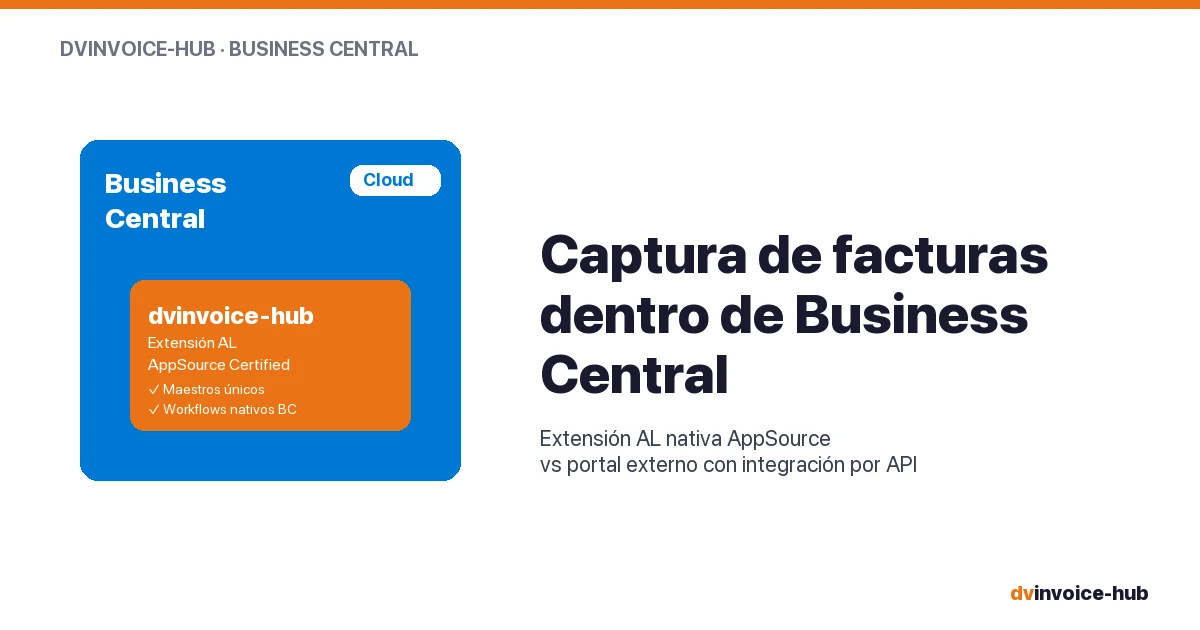
AP Invoice Capture in BC: Native Extension vs Portal
AP invoice capture in Business Central: why a native AL extension is more robust than external portals that break reconciliation and APIs.
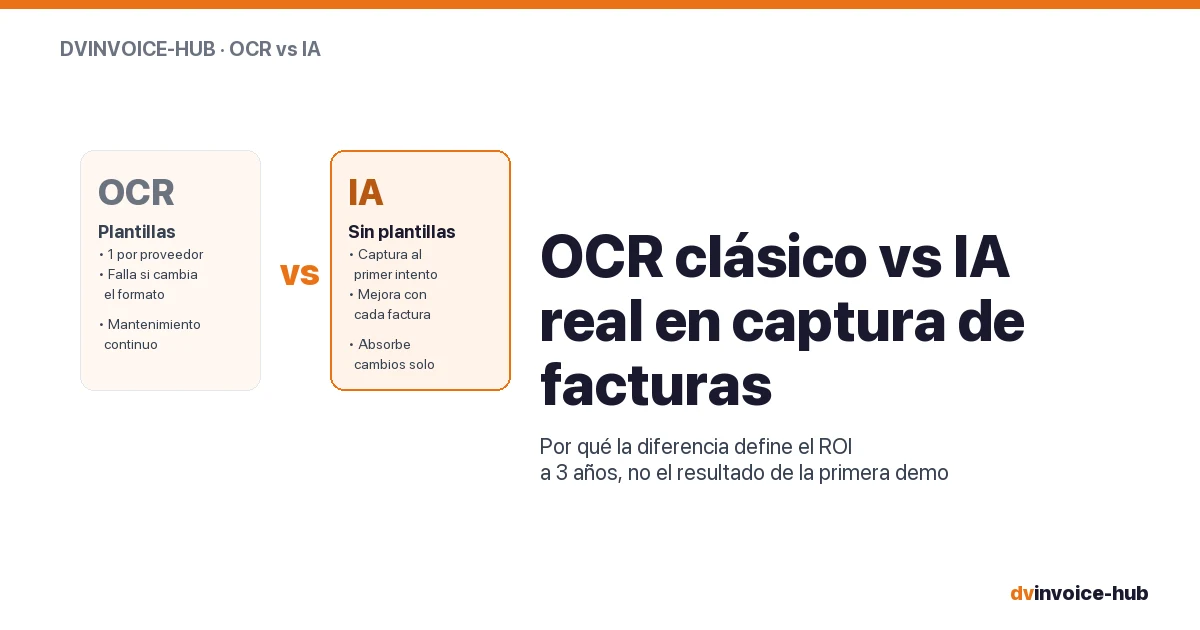
OCR vs AI for AP Invoice Capture in Business Central
Classic OCR and AI-powered capture sound alike but do very different things. Why AI applied to your supplier base reshapes the 3-year ROI.
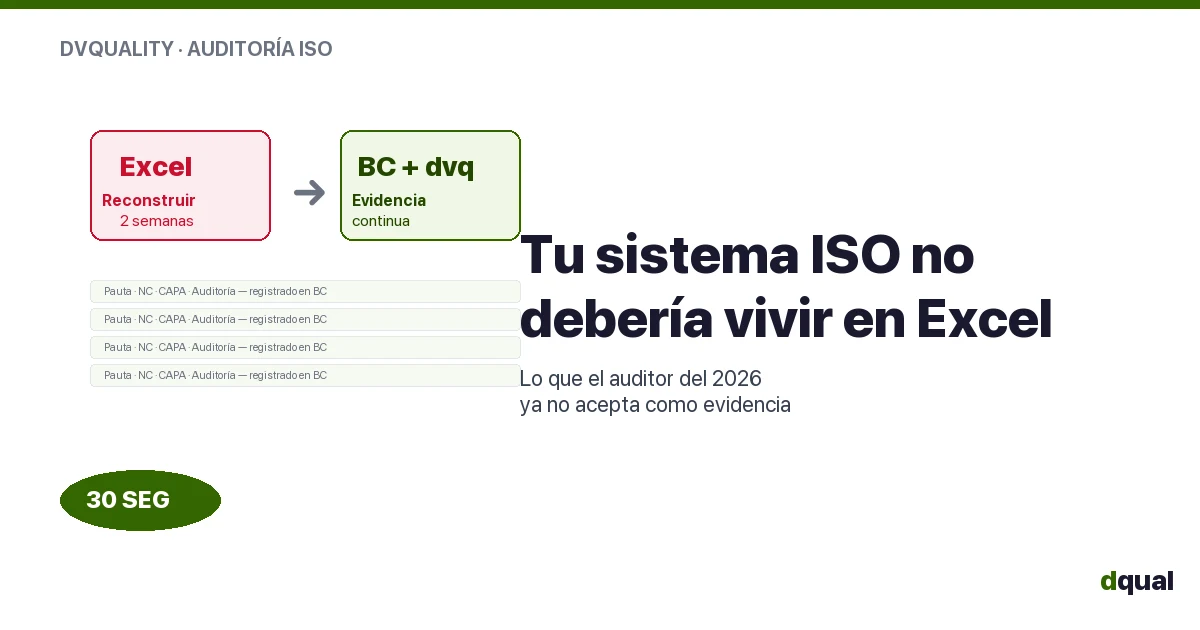
ISO Quality Out of Excel: What the Auditor Demands
ISO 9001/14001/45001 audits no longer accept reconstructed evidence. The quality management system needs continuous traceability, not Excel.