
ISO Quality Out of Excel: What the Auditor Demands
ISO 9001/14001/45001 audits no longer accept reconstructed evidence. The quality management system needs continuous traceability, not Excel.
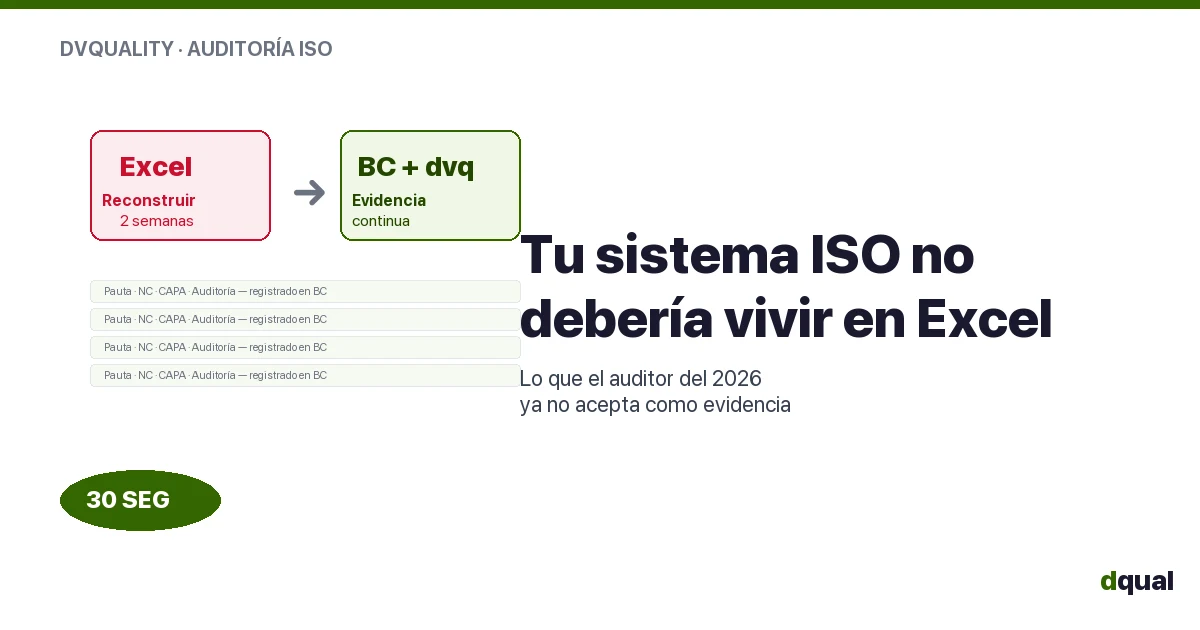
There is a pattern that repeats in almost every Spanish industrial SME with ISO compliance. One month before the next audit, the quality manager blocks out their diary. They start collecting plans in their Excel file, export the records of the plant visits, take photos of the paper sheets signed by the operators, look up emails for each non-conformity reported in the last year and reconstruct a dossier to hand to the auditor. If everything goes well, two weeks of intense work. If something goes wrong — a lost email, an undocumented plan, a supplier whose evaluation was done “by ear” — the findings start to appear.
This pattern is the clearest symptom of a quality system that doesn’t work as a system, but as periodic theatre. The company doesn’t operate with quality: it simulates it whenever it is time to renew the certificate.
There is another, less common but growing pattern in European industry: quality is generated continuously during operations. Every lot received triggers an inspection plan. Every measurement the operator captures generates automatic evidence. Every open non-conformity is left with cause, owner, deadline and effectiveness verification. When the auditor arrives, there is nothing to prepare — everything is there, in the system, indexed, traced and exportable in one click.
The difference between the two patterns isn’t only time saved. It is the difference between a real quality system and a performed one. And auditors notice it earlier each year.
What no longer works in an ISO audit
The ISO 9001:2015 standard (and its equivalents 14001 for environment, 45001 for occupational health and safety, EMAS for eco-management, FAMI-QS for animal feed) has been pushing for years towards the “process-based approach”. The auditor of 2015 still accepted a well-organised file system by folders; the 2026 one expects to see:
- Continuous evidence, not collected. If the control measurements were printed and filed just before the audit, the auditor knows they aren’t operational. They ask things like “show me the measurements of the lot received yesterday” or “open the latest non-conformity”. If you have to go and find the corresponding paper, the system doesn’t work.
- Bidirectional lot traceability. From raw material through to the delivered product, and back. If you have a customer complaint about a specific lot, the auditor wants to see in minutes: what raw material went in, which inspection plans it passed, which supplier provided it, which deviations appeared, which manufacturing orders consumed it, where it was shipped. All of that lives in the ERP — if it is in parallel Excels, the data isn’t traceable.
- Supplier evaluation with data. Saying “supplier X works well” isn’t an evaluation. The auditor wants to see the history: how many lots have they sent, how many non-conformities have they generated, how many rejections at receipt, what is the documentation compliance percentage. If that data is requested in an Excel sheet the buyer fills out by intuition, it isn’t supplier evaluation — it is documented personal opinion.
- CAPA cycle closure. A non-conformity without a corrective action with effectiveness verification is a piece of paper with no value. The standard requires every NC to have: documented root cause, implemented corrective action, implementation date, verification that the action worked weeks later. If the last column of the Excel is empty or has “OK” without evidence, the auditor flags it.
- Imputed quality costs. ISO 9001:2015 doesn’t require quality costs explicitly, but the management board does. The “cost of poor quality” (CONQ — cost of non-quality) must be posted to the lot, the item, the supplier. If the ERP doesn’t capture it, the only thing you can say is “we lost a bit of time this month” — which isn’t actionable information.
Why the parallel Excel always fails
The typical argument for keeping quality in Excel is: “it is more flexible, I control it, I don’t depend on IT”. It works for a while. It always breaks for the same three reasons:
- Information doesn’t flow to the ERP. When a lot is rejected at receipt, the ERP doesn’t find out. The purchase remains active. The supplier’s invoice arrives and is paid. Three weeks later somebody discovers the material wasn’t returned and the credit wasn’t claimed. The cost has doubled.
- Data is duplicated and diverges. The buyer has their supplier Excel. Quality has its own. When a new supplier arrives, somebody adds them to one and forgets the other. When end-of-year evaluation comes, the two Excels say different things. The auditor asks which one is the good one and nobody knows.
- Continuity depends on people. The quality manager built the system in their head over 5 years. When they leave, the successor inherits 47 .xlsx files with undocumented macros. Every person change resets the system’s maturity. After three rotations, the system goes back to paper.
When the quality system lives inside the ERP, none of the three happen. Masters are single (suppliers, items, lots, locations), the inspection plans live next to the lot data, non-conformities link to the manufacturing orders, costs are posted to the standard financial dimensions, and the person joining tomorrow inherits exactly what the person who left handed over.
The practical question: what must a digital QMS fulfil?
If you are evaluating quality management solutions, the minimum criteria to check are:
- Do the inspection plans live next to the item and the supplier? (If they are in a separate tool, they generate duplication.)
- Are measurements captured in the moment by the operator? (If an administrator enters them days later, you lost real-time control.)
- Does lot quarantine actually block outflows in the ERP? (If it is just an “informative field”, the operator can ignore it.)
- Do non-conformities link with the manufacturing order, the lot and the supplier? (If they are just “tickets” without context, they don’t add intelligence.)
- Are quality costs posted to the lot’s financial dimension? (If they only appear in monthly reports, they are accounting, not operational.)
- Does the Quality Manager’s dashboard open at log-in? (If they have to open another tool, they abandon it.)
- Is the audit exported in one click with all the evidence? (If reconstruction is required, the system isn’t operational.)
These seven points separate a real QMS (a live system inside the ERP) from a performed QMS (parallel Excel that gets reconstructed before each audit).
What changes when the QMS lives in Business Central
For companies already on Microsoft Dynamics 365 Business Central — increasingly common in mid-sized Spanish industry — quality can live as a native ERP extension, not as an external system. This means:
- The control plans are linked to the item and supplier of the BC master. A single source of truth.
- Measurements are captured from the operator’s mobile app or from the shop-floor terminal, and compare in real time against tolerances.
- Lot quarantine really blocks: at Item Ledger Entry and Warehouse Entry level. Impossible to ship a non-conforming lot by oversight.
- Non-conformities open CAPA with cause, owner, deadline, action plan and effectiveness verification. Linked to the lot, the item, the supplier and the manufacturing order.
- Quality costs are automatically posted to the lot and roll up to the project/order margin with standard financial dimensions.
- The Quality Manager’s Role Center opens with KPIs on Power BI: NCs by supplier, quality cost by family, % of plans with deviation, audit trend.
- The ISO audit is exported as a report straight from the ERP, with all the evidence indexed.
The transition from Excel to a QMS inside the ERP is not a tool change — it is an operational model change. And it is the only thing the 2026 auditor no longer settles for less.
The underlying question
Before the next audit, it is worth asking yourself this question:
“What happens if the auditor asks me for the last measurement of the lot received yesterday? Do I find it in 30 seconds or in 30 minutes?”
If the answer is “30 minutes searching between folders and emails”, your quality system isn’t a system — it is a historical archive that gets updated occasionally. The difference with a real one is the difference between “we are certified” and “we operate with quality”. The two things look alike to the 2015 auditor. The 2026 one only cares about the second.
In summary
- ISO 9001 / 14001 / 45001 audits no longer tolerate evidence reconstructed cold just before the auditor.
- The parallel Excel always fails for three reasons: information doesn’t flow to the ERP, data is duplicated and diverges, and continuity depends on people (and breaks at every rotation).
- A digital QMS must fulfil 7 practical criteria to be operational: plans next to the master, real-time measurements from the operator, effective quarantine in the ERP, NCs linked with context, costs posted to the lot, Role Center with KPIs at log-in and audit exportable in one click.
- When the QMS lives inside Business Central as a native AL extension, the seven criteria are met by design — without external systems, without reconciliation, without parallel Excel.
- The practical question to validate your current system: “Do I find the last measurement of a lot in 30 seconds or in 30 minutes?”
Want to see a native QMS on Business Central? At Davisa we have developed dvquality, an AL extension published on AppSource that turns Business Central into a full ISO quality system: plans, measurements, effective lot quarantine, non-conformities + CAPA, supplier evaluation and integrated Power BI. Public pricing EUR 7,750/tenant with unlimited users and companies. Request a demo or check the pricing.
Artículos relacionados
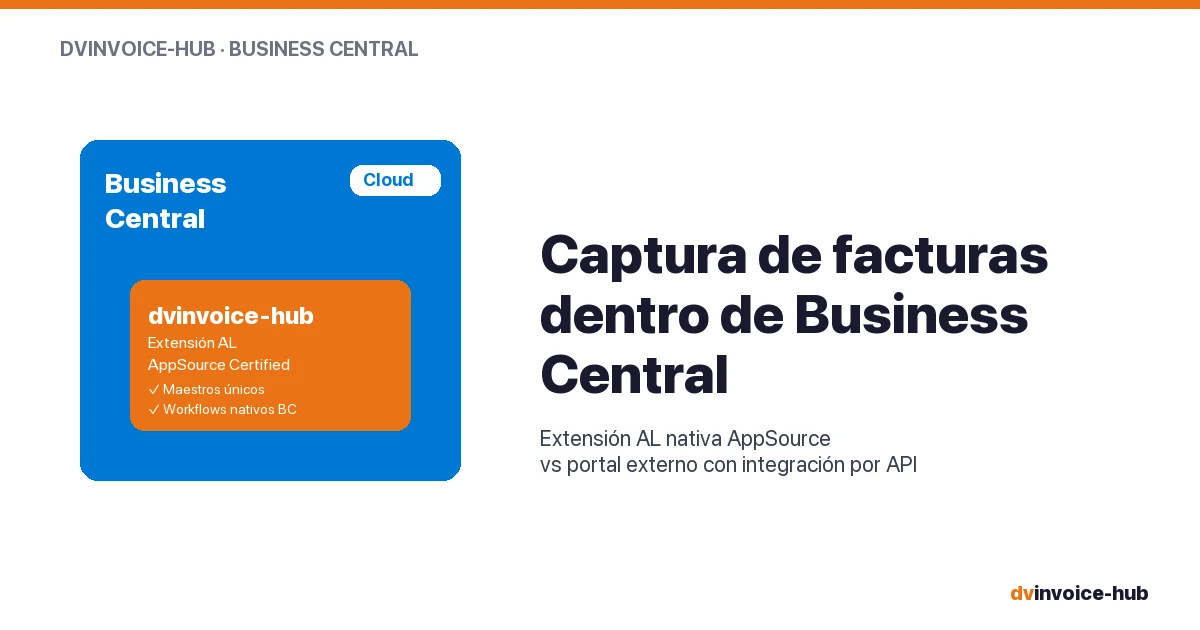
AP Invoice Capture in BC: Native Extension vs Portal
AP invoice capture in Business Central: why a native AL extension is more robust than external portals that break reconciliation and APIs.
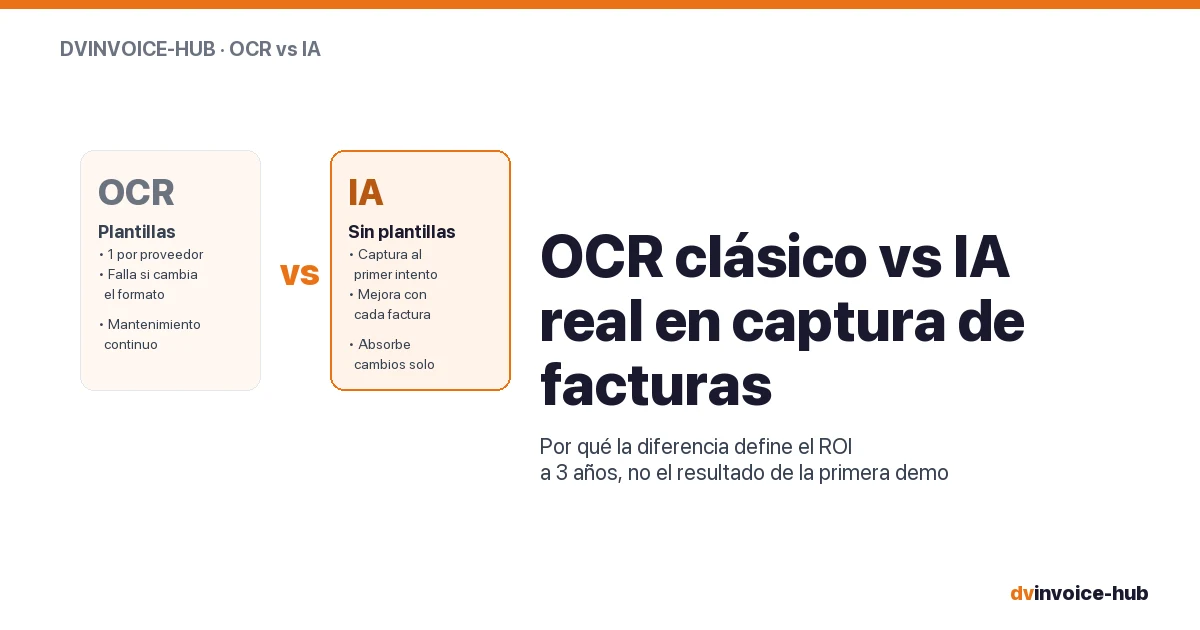
OCR vs AI for AP Invoice Capture in Business Central
Classic OCR and AI-powered capture sound alike but do very different things. Why AI applied to your supplier base reshapes the 3-year ROI.
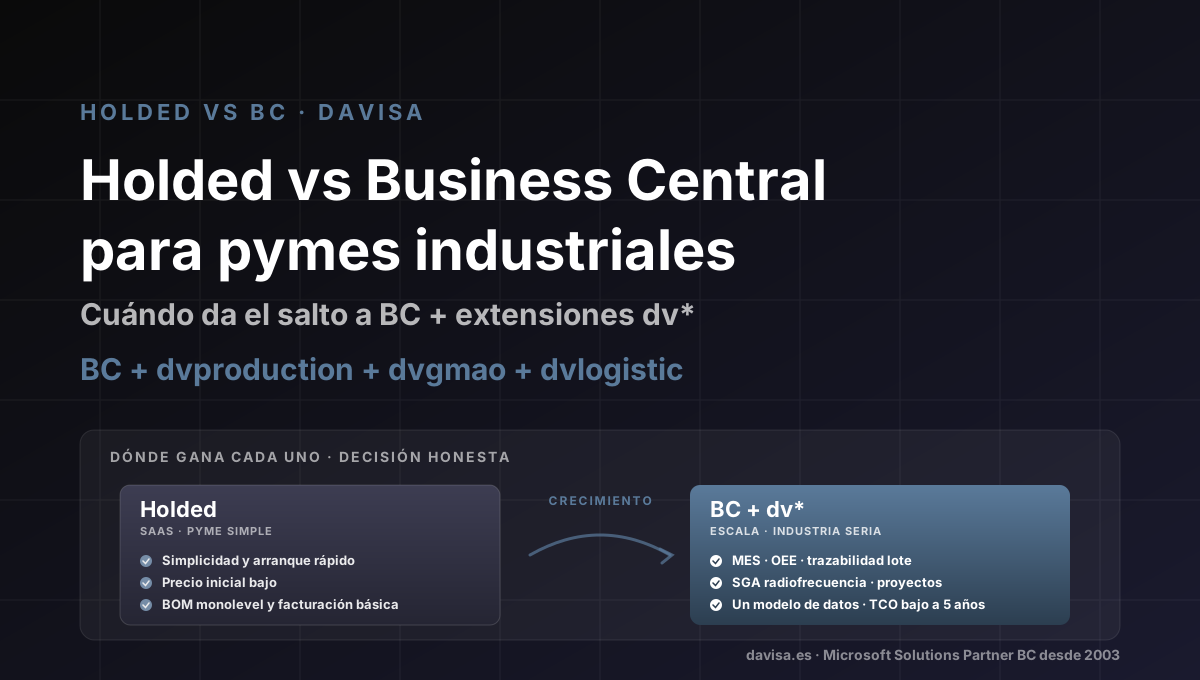
Holded vs Business Central: which ERP fits best
Honest comparison between Holded (Spanish SaaS) and Microsoft Dynamics 365 Business Central + dv* for manufacturers and distributors with 50-150 staff. Cases, pricing, decision.