Holded vs Business Central: which ERP fits best
Honest comparison between Holded (Spanish SaaS) and Microsoft Dynamics 365 Business Central + dv* for manufacturers and distributors with 50-150 staff. Cases, pricing, decision.
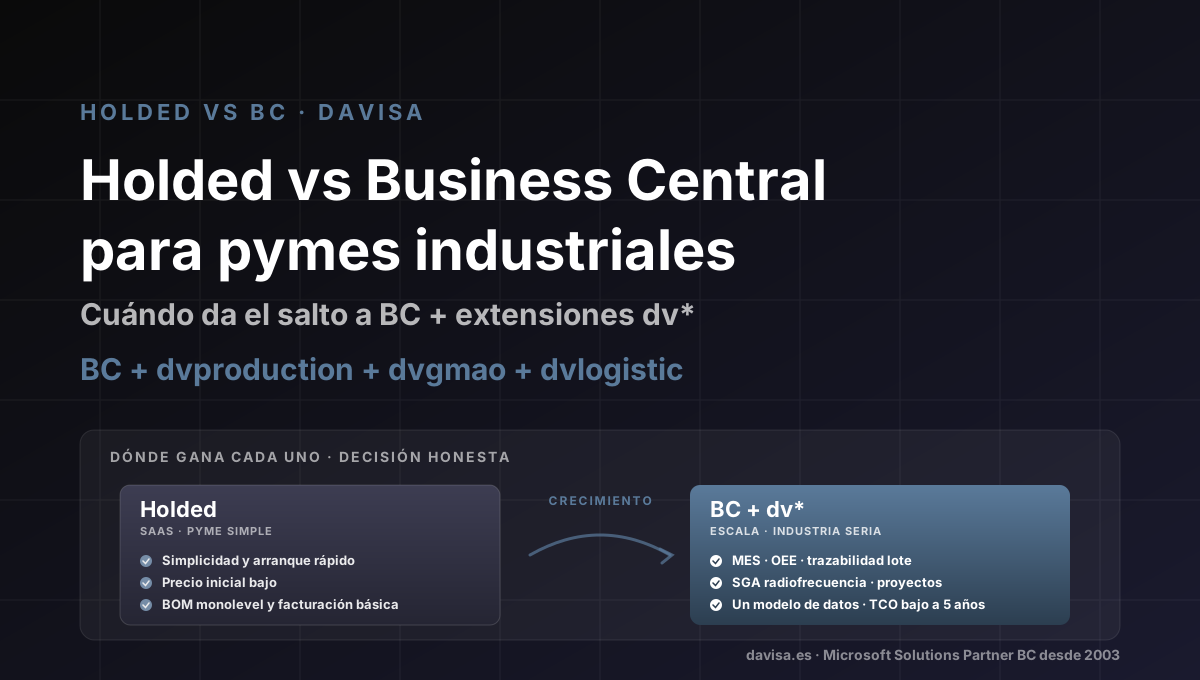
Holded vs Business Central: which ERP fits best according to the type of company
In recent years we’ve seen a specific conversation grow inside Spanish SMEs: companies that started with Holded when they were small and agile, and are now starting to ask themselves whether they need a deeper ERP like Microsoft Dynamics 365 Business Central.
The comparison is usually framed wrong from the start. Not because one is “good” and the other “bad”, but because both were born to solve different needs.
Holded prioritises simplicity, speed and ease of use.
Business Central prioritises operational depth, scalability and the capacity to adapt.
That is why the right question is not “which ERP is better”, but:
Which ERP fits best with the current moment and complexity of your company?
What Holded does really well
It must be said clearly: Holded is a good product for a part of the Spanish business fabric.
Especially for small:
- service companies
- retail
- startups
- businesses with relatively simple processes
Its great strength is ease of use.
Fast implementation
A small company can start working with Holded in a matter of weeks. Onboarding is fast and with little friction.
Low learning curve
The interface is designed for non-technical users. Administrative, sales or management teams can start using it virtually from day one.
Simple SaaS without infrastructure
No servers, no maintenance, no technical complexity. It works from browser, mobile and tablet, with a modern, simple experience.
Good fit for Spanish SME taxation
Holded properly covers most standard tax needs:
- VAT
- IRPF (personal income tax withholdings)
- common AEAT models
- invoicing
- bank reconciliation
For many companies this is more than enough for years if growth is moderate.
Low entry cost
For small teams the monthly cost is very competitive, especially compared with more complex ERPs or larger-scope implementations.
What Business Central brings
Microsoft Dynamics 365 Business Central plays in a different category.
It isn’t designed merely to “keep the accounts”, but to become a complete management platform on which the company can grow for years.
More operational depth
Business Central offers more capability in areas such as:
- finance
- purchasing
- sales
- inventory
- production
- projects
- automation
- reporting
- multi-company
Microsoft ecosystem
One of its great differentiators is the integration with:
- Microsoft 365
- Teams
- Outlook
- Power BI
- Power Automate
- Power Apps
- Azure
This allows much more connected and automated processes to be built.
More customisation capability
Business Central is much more configurable and extensible. This has an obvious advantage:
- it can adapt to more complex companies
But also a consequence, unless you work with a partner expert in your sector with certified extensions:
- it requires more analysis
- more implementation
- more process definition
Scalability
Where Holded stands out for simplicity, Business Central stands out for runway.
It is common to see it in companies with:
- a team with a strongly digital mindset
- need for growth
- companies in a generational handover
- multiple companies
- different warehouses
- international operations
- more complex financial structures
- sustained growth
- or activities whose nature is complex regardless of their size
In addition, Business Central brings an important advantage: the possibility to evolve through specialised solutions without changing platform.
The Microsoft ecosystem allows specific functionality to be added depending on the sector or complexity level of the company:
- industrial manufacturing
- advanced logistics
- real-estate development and construction
- quality and traceability
- maintenance
- document automation
- EDI
- forecasting and planning
- business intelligence
This allows many companies to grow on the same technological base for years, avoiding continuous migrations between systems.
Data security and continuity
Another important aspect is technological continuity.
Business Central is part of Microsoft’s enterprise ecosystem, with:
- continuous updates
- international support
- regulatory compliance
- advanced security standards
- global cloud infrastructure on Azure
For many companies this brings peace of mind in the long term:
- product stability
- continuous evolution
- compatibility guarantee
- sustained investment in innovation
Especially in organisations where the ERP becomes a critical system, confidence in technological continuity and the solidity of the vendor becomes a relevant factor.
Traceability and operational control
As the company grows, the importance of data quality also increases.
In environments with:
- several departments
- different warehouses
- manufacturing
- international operations
- regulated traceability
the capacity to maintain a single consistent information model becomes key.
Here Business Central stands out especially for:
- cross-cutting traceability
- integrated financial control
- permission security
- data audit
- process automation
- integration between operational areas
More than “having more features”, the difference usually lies in the capacity to maintain complex operations under a single coherent system.
Direct comparison: Holded vs Business Central
| Area | Holded | Business Central |
|---|---|---|
| Implementation | Very fast | Medium |
| Ease of use | Very high | Medium |
| Learning curve | Low | Medium/High |
| Accounting | Good | Very advanced |
| Financial management | Adequate | Very solid |
| Production | Basic | More complete |
| Multi-company | Limited | Very powerful |
| Reporting | Adequate | Very advanced |
| Automation | Limited | Very high |
| Customisation | Low | High |
| Scalability | Medium | High |
| Ecosystem | Closed/simple | Microsoft ecosystem |
| Initial cost | Low | Higher |
When Holded usually falls short
Many companies can work perfectly with Holded for years.
The change normally doesn’t happen because “the ERP fails”, but because the operational complexity of the company changes.
The most common signs tend to be:
- several warehouses
- more demanding traceability
- finer financial control
- multiple companies
- industrial processes
- advanced reporting
- complex automation
- international growth
- need for integration with other technologies
- need for AI
It is also common to start seeing:
- parallel spreadsheets
- manual reconciliations
- duplicate data
- external tools disconnected from each other
At that point some companies start needing a deeper and more extensible platform.
The role of specialised solutions
This is where the verticalisations and specific extensions for certain sectors or processes come in.
For example:
- industrial manufacturing
- advanced logistics
- project world including real-estate development and construction
- quality
- traceability
- stock forecasting
- maintenance
- EDI
In the Business Central ecosystem there are multiple specialised solutions that extend the ERP according to the type of company and operational complexity level.
This allows the platform to be adapted to very different sectors without having to change ERP every few years.
It is important to understand that this is no longer a “Holded vs Business Central” comparison, but a different conversation:
- the company has reached a level of complexity that requires more specialised tools.
So, which ERP is better?
The real answer is: it depends on the company and its moment.
Holded usually fits better when:
- the company is small
- processes are relatively simple
- speed and ease are prioritised
- the team doesn’t want technical complexity
- the focus is on operating fast
- the team has little involvement with the digital system
Business Central usually fits better when:
- the company grows in complexity
- there are multiple connected operational areas
- there are advanced financial needs
- several warehouses or companies appear
- more automation and control are required
- traceability and data security become critical
- a platform prepared to grow for years is needed
- the company bets on a solid platform that lets it adapt to its changes
- companies of any size with complex processes
What matters is not implementing the “most powerful” ERP, but the one that really fits the current situation of the company.
Some companies will be perfectly fine with Holded for years.
Others will reach a point where they need a deeper, more specialised and more adaptable platform like Business Central.
And both decisions can be correct depending on the context.
Artículos relacionados
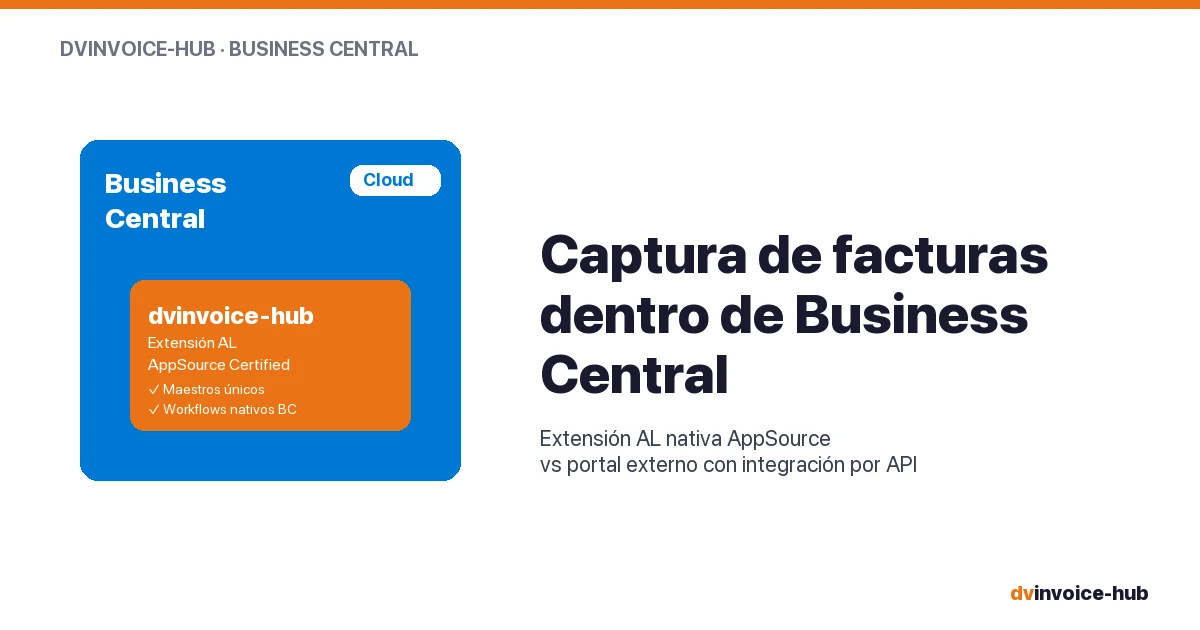
AP Invoice Capture in BC: Native Extension vs Portal
AP invoice capture in Business Central: why a native AL extension is more robust than external portals that break reconciliation and APIs.
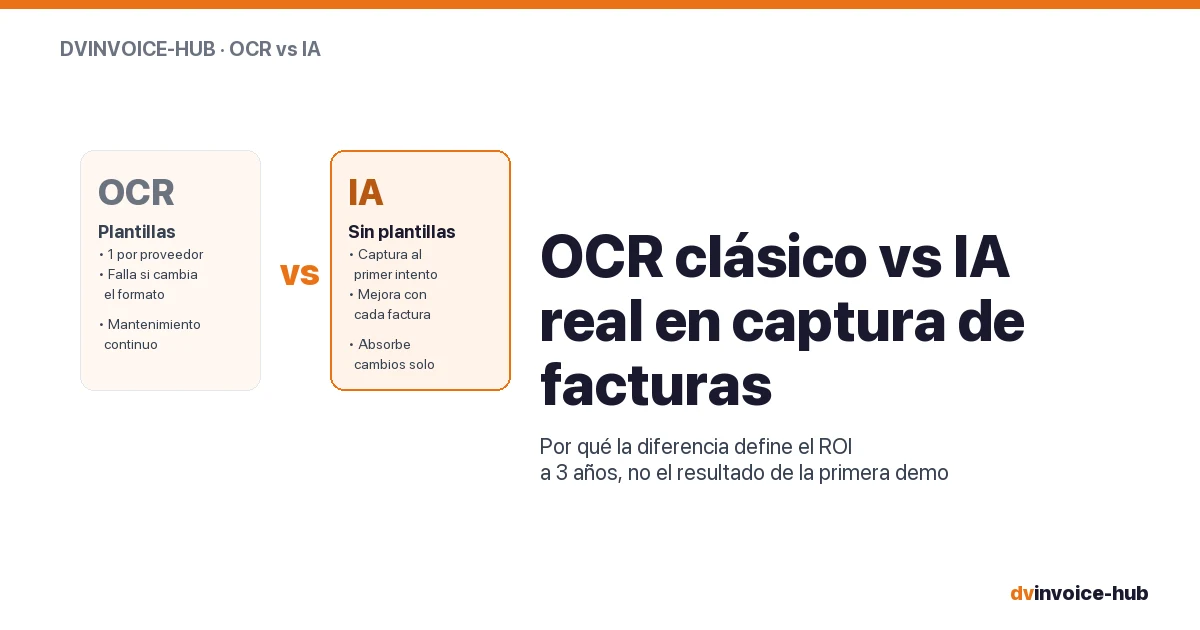
OCR vs AI for AP Invoice Capture in Business Central
Classic OCR and AI-powered capture sound alike but do very different things. Why AI applied to your supplier base reshapes the 3-year ROI.
ISO Quality Out of Excel: What the Auditor Demands
ISO 9001/14001/45001 audits no longer accept reconstructed evidence. The quality management system needs continuous traceability, not Excel.