
Assistant, Copilot or AI Agent: Understanding the Future of the Intelligent ERP
Differences between assistant, copilot and AI agent in the ERP context. How business management systems evolve with artificial intelligence.
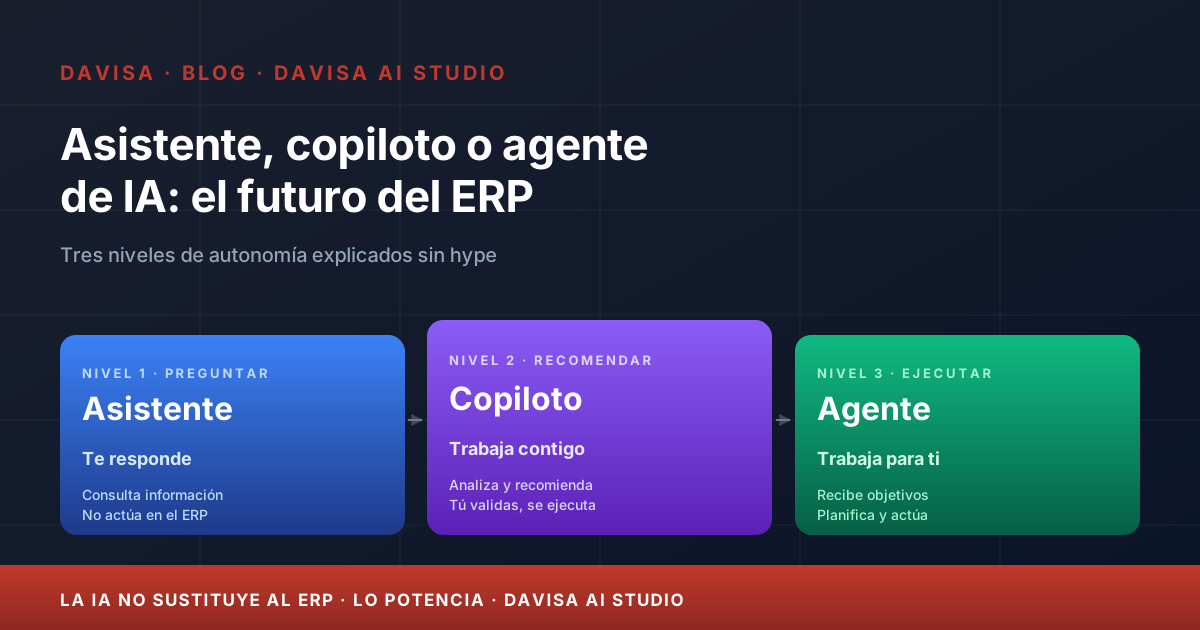
Artificial intelligence is transforming the way we work with business management systems.
Yet when we talk about AI applied to the ERP, we routinely hear terms like assistant, copilot or agent. They are often used interchangeably, even though they actually represent very different levels of autonomy and capacity to act.
Understanding these differences is essential to grasp where ERPs will evolve over the coming years.
The first step: AI assistants
An assistant is the most basic form of interaction between a user and artificial intelligence.
Its job is to answer questions using the information available inside the system.
For example:
- What is the available stock of this product?
- How do I create a production order?
- What does this error mean?
- Show me this customer’s sales over the last quarter.
In each of these cases, AI queries the information, interprets it and produces a useful answer for the user.
Its main goal is to facilitate access to knowledge and reduce the time spent looking for information.
The key point is that an assistant does not perform actions inside the ERP. It simply answers.
The next level: copilots
Copilots represent a natural evolution of assistants.
They no longer limit themselves to answering questions; they actively help the user execute tasks.
Instead of providing information only, they analyse data, detect patterns and make recommendations.
Some examples:
- Suggesting optimal production planning.
- Proposing purchase orders based on forecasted demand.
- Detecting inventory anomalies.
- Drafting communications to customers or suppliers.
- Recommending corrective actions when project variances appear.
In this scenario, AI brings intelligence to the process, but the final decision stays with the user.
The copilot proposes.
The person validates.
And then the action is executed.
For that reason, many organisations are starting to incorporate copilots into areas like procurement, logistics, manufacturing, maintenance or project management.
If you want to see what Microsoft Copilot does concretely inside Business Central today, we break it down in this dedicated analysis.
The new generation: AI agents
Agents represent the highest level of autonomy.
Instead of receiving concrete questions or requests, they receive objectives.
For example:
- Avoid stockouts.
- Reduce delivery delays.
- Optimise resource allocation.
- Manage transport incidents.
- Improve project profitability.
From that objective, the agent is able to plan actions, use tools, execute processes and supervise results.
To avoid a stockout, for instance, it could:
- Analyse demand forecasts.
- Review available inventory.
- Automatically generate purchase proposals.
- Place orders with authorised suppliers.
- Notify the relevant manager of incidents.
The fundamental difference is that the agent does not just recommend.
It acts.
Always following the business rules, permissions and controls defined by the organisation.
A simple way to understand it
We can summarise these three levels as follows:
| Level | What it does | Who decides |
|---|---|---|
| Assistant | Answers you | The user asks and the AI replies |
| Copilot | Works with you | AI analyses, recommends and helps decide |
| Agent | Works for you | AI receives objectives and executes actions to reach them |
What does this mean for the future of ERPs?
For decades, ERPs have been systems designed to record and manage business processes.
The arrival of artificial intelligence is changing this reality.
ERPs will no longer be tools only for storing information or executing transactions.
They will become platforms able to understand what is happening in the company, anticipate certain situations and actively collaborate in decision-making.
Assistants will facilitate access to information.
Copilots will increase team productivity.
And agents will enable the automation of entire processes oriented to business objectives.
The key: a solid base
There is, however, an aspect that often goes unnoticed.
The quality of any AI system depends directly on the quality of the data and processes it works on.
An agent can be extraordinarily sophisticated.
But if it works with incomplete information, poorly defined processes or inconsistent data, its results will be equally poor.
That is why, before talking about autonomous agents, companies should ask whether they have a solid base on which to build them.
And that base remains the ERP.
Because artificial intelligence does not replace the ERP.
It amplifies it.
And the better the information available, the greater the value AI can bring to the organisation.
What we are doing at Davisa
At Davisa we are working to incorporate assistants, copilots and agents into our systems, helping our customers evolve towards smarter, more efficient, future-oriented management.
We do it on two complementary fronts:
- Inside the dv extensions* — each extension progressively incorporates AI capabilities specific to its domain (conversational assistant on module data, copilots on concrete processes, automations oriented to objectives).
- From Davisa AI Studio — our sector-focused AI consulting practice, where we design and deploy custom assistants, copilots and agents on top of your Business Central, with use cases already proven in real customers and in our own internal operation.
If you want to go deeper into a specific case, you have the use case catalogue (invoices, anomalies, executive close, site manager, internal knowledge, technical-department support…) or you can start with a 5-day AI Discovery where we map which level — assistant, copilot or agent — fits each of your processes.
The AI revolution has already begun.
The question is not whether it will reach ERPs.
The question is how to leverage it to generate real value in every business process.
Artículos relacionados
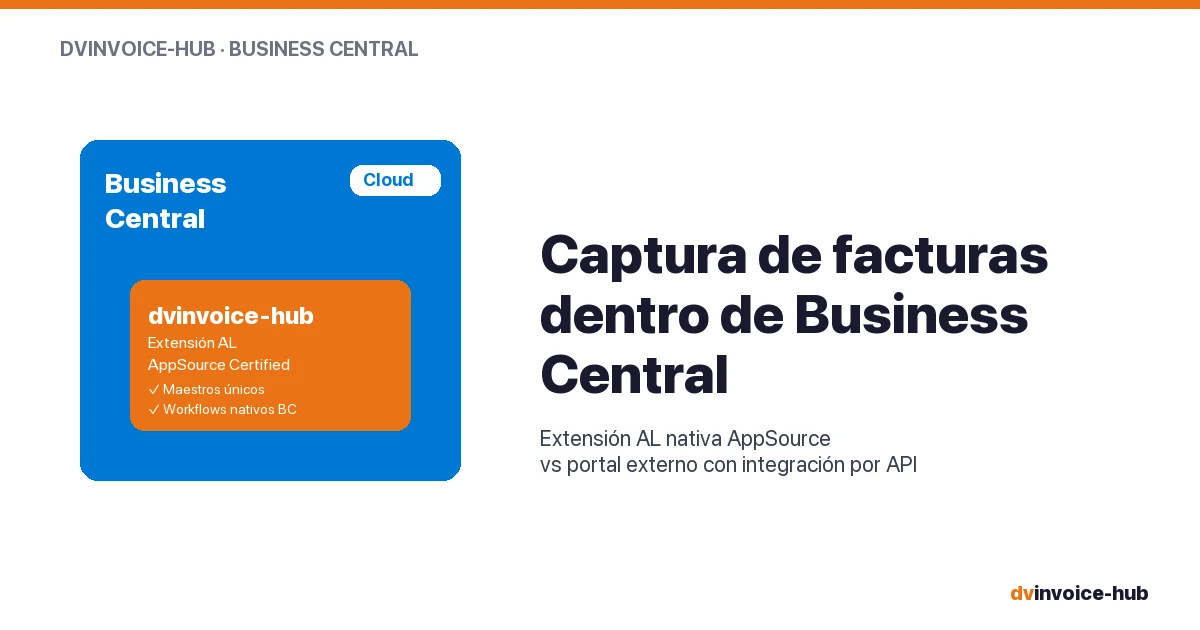
AP Invoice Capture in BC: Native Extension vs Portal
AP invoice capture in Business Central: why a native AL extension is more robust than external portals that break reconciliation and APIs.
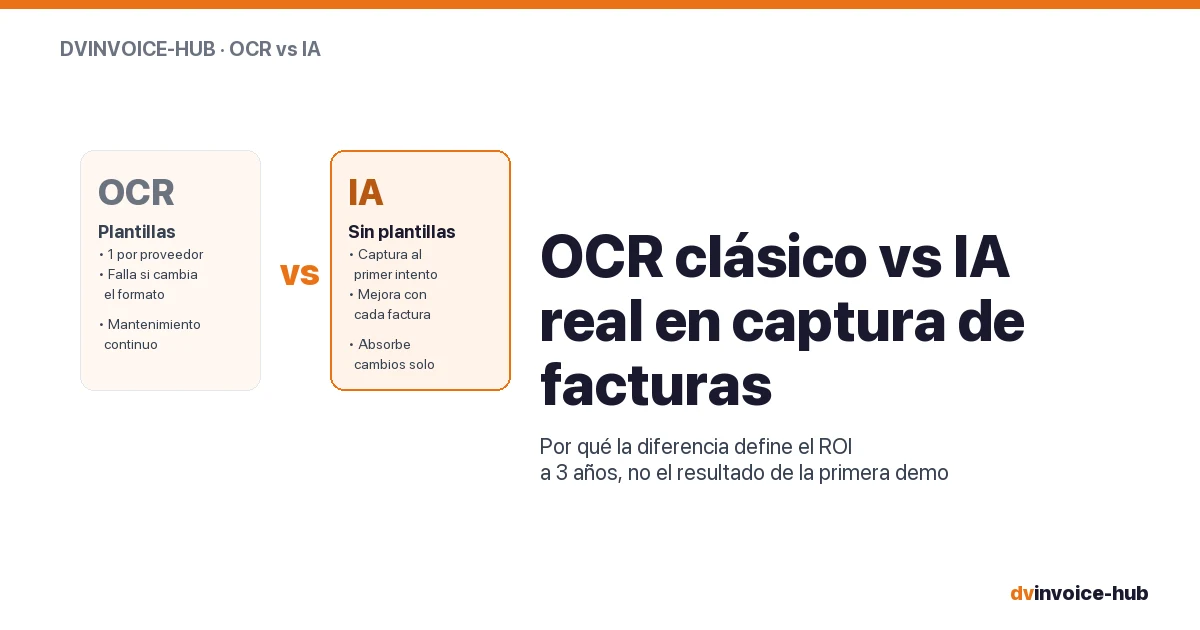
OCR vs AI for AP Invoice Capture in Business Central
Classic OCR and AI-powered capture sound alike but do very different things. Why AI applied to your supplier base reshapes the 3-year ROI.
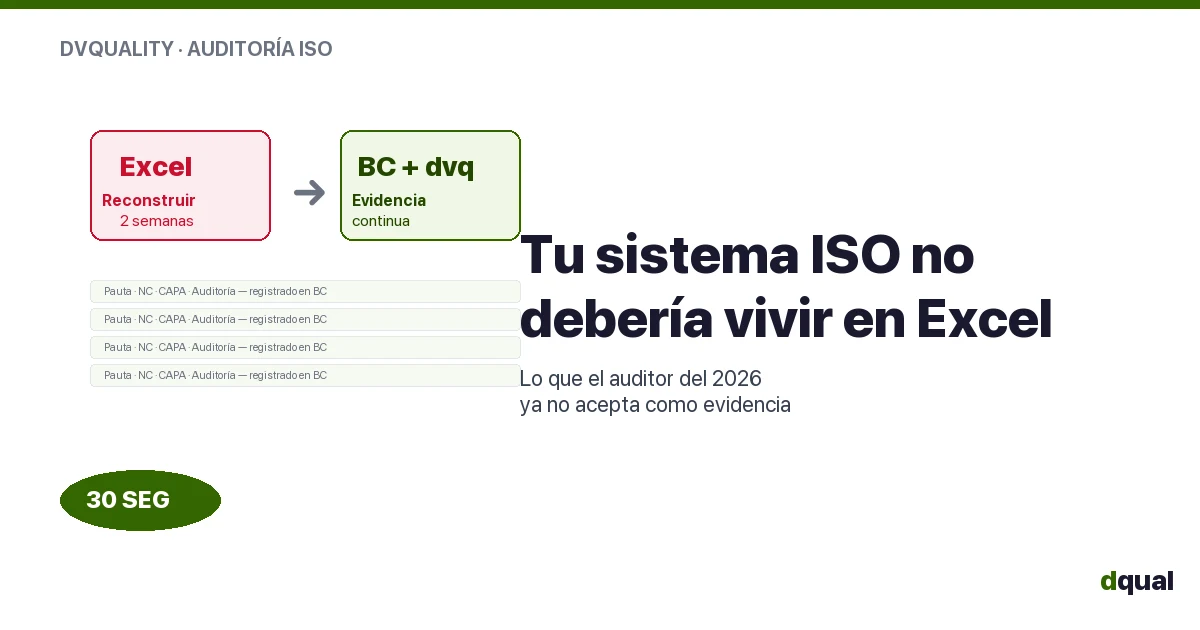
ISO Quality Out of Excel: What the Auditor Demands
ISO 9001/14001/45001 audits no longer accept reconstructed evidence. The quality management system needs continuous traceability, not Excel.