Holiday and Absence Management for SMEs
How to bring order to holiday and absence management in an SME: the basic legal framework, types of leave, best practices, and why you should digitise the process with real-time balances.
In many small and medium-sized businesses, holiday requests are handled by email, WhatsApp, or a shared spreadsheet. It works — until it doesn’t: two people from the same team end up off during the busiest week of the year, someone claims days they thought they still had, and nobody really knows how much leave anyone has left. Managing holidays and absences is not a minor administrative chore: it affects planning, productivity, and team morale. This guide covers the basic legal framework, best practices, and how to digitise the process. The legal information provided here is general in nature and does not replace professional employment law advice — always check the collective agreement that applies to your business.
Stop fighting with spreadsheets. dvgtime automates time tracking, absence management, and labour costs, fully integrated with Business Central. Book a demo.
The typical problem in SMEs
When absence management relies on makeshift tools, the same symptoms keep appearing:
- Inaccurate balances: nobody is sure how many days each person has left, and the count is done “by feel” at year end.
- Overlaps: several people from the same team take time off at once during a critical period, and service suffers.
- Lack of visibility: managers and colleagues can’t see at a glance who is out and when.
- Lost requests: an unanswered email or a message buried in a chat leads to confusion over whether holidays were actually approved.
- Administrative burden: someone spends hours consolidating scattered requests and manually recalculating balances.
The cost is not just the lost time — it’s the sense of arbitrariness that comes from having no clear rules and no reliable data.
The basic legal framework in Spain
The Workers’ Statute sets a minimum of 30 calendar days of paid holiday per year, which cannot be replaced by financial compensation except in specific cases (such as the final settlement when an employment relationship ends). A few key points to bear in mind:
- Collective agreements can improve on the legal minimum, but never reduce it. Many agreements express holidays in working days rather than calendar days, so the actual entitlement depends on the applicable text.
- Accrual is proportional to time worked: someone who joins mid-year earns the corresponding fraction of their annual entitlement.
- The holiday period is agreed jointly between employer and employee and must be communicated in advance; the company’s working calendar is the reference document for planning purposes.
This is general information: the specifics of your sector, your collective agreement, and your working calendar take precedence. If in doubt, check with your employment law adviser.
A clear, written holiday policy prevents the vast majority of disputes. When everyone knows the rules and can see their own balances, decisions stop feeling arbitrary.
Types of absence worth distinguishing
Not all absences are alike, and they are not managed the same way. Telling them apart is the first step towards accurate tracking:
Annual leave
The paid yearly rest entitlement. Planned in advance and deducted from the employee’s balance.
Paid statutory leave
Justified absences provided for by law or a collective agreement (for example, for marriage, the death of a family member, change of home address, or unavoidable civic duties). These do not consume holiday balance, but must be recorded and supported with documentation.
Sick leave and temporary incapacity (IT)
Absences due to illness or accident, covered by a medical certificate. These follow their own management and Social Security notification process and must not be confused with holiday leave.
Personal days
Days that some collective agreements or internal policies grant for personal matters. It is worth defining clearly how many days are available and how they must be requested.
Best practices for absence management
- A clear, written policy: what entitlement employees have, how requests are made, required notice periods, and criteria for resolving clashes.
- A request-and-approval workflow: a single, consistent process in which the employee requests leave, the manager approves or declines, and a record of the decision is kept.
- Real-time balances: every employee can see their available, pending, and used days without having to ask anyone.
- A shared team calendar: visibility into who is out so cover can be arranged in advance.
- Reasonable notice requirements: setting request deadlines that allow proper planning.
- Avoiding overlaps during critical periods: defining limits on how many people can be off at the same time during peak workload dates.
Why it pays to digitise the process
Moving from email and spreadsheets to a dedicated tool is not a technological luxury — it solves the underlying problems at their root:
- Fewer errors: balances are calculated automatically from accrual and actual consumption, with no manual counting.
- Employee self-service: each person submits requests and checks their balance without depending on the HR or admin team.
- Traceability: there is a clear record of who requested what, who approved it, and when — providing legal certainty and eliminating misunderstandings.
If you are already digitising mandatory time tracking in Spain, absence management is the natural complement that rounds out working-hour control and team planning.
How dvgtime solves it
dvgtime, the workforce management platform from DAVISA INFORMÁTICA, brings holidays and absences into a single digital workflow:
- Requests and approvals through a clear process between employees and their managers, with a record of every decision.
- Real-time balances so each employee can check their available, pending, and used days.
- A team calendar that shows who is out and helps prevent overlaps on critical dates.
- Synchronisation with Business Central: in its connected editions, dvgtime sends absences and holidays to Microsoft Dynamics 365 Business Central, so the ERP reflects reality without duplicate data entry. We cover this alongside time tracking in Business Central.
The result is a well-organised process, with clear rules and reliable data, that saves administrative time and reduces conflict. If you want to compare approaches, take a look at our comparison page and calculate your return on investment on the ROI page.
Bring order to your team’s holidays and absences. We will show you dvgtime using your own SME’s scenarios, with no commitment required. Request a demo.
Further reading
Artículos relacionados
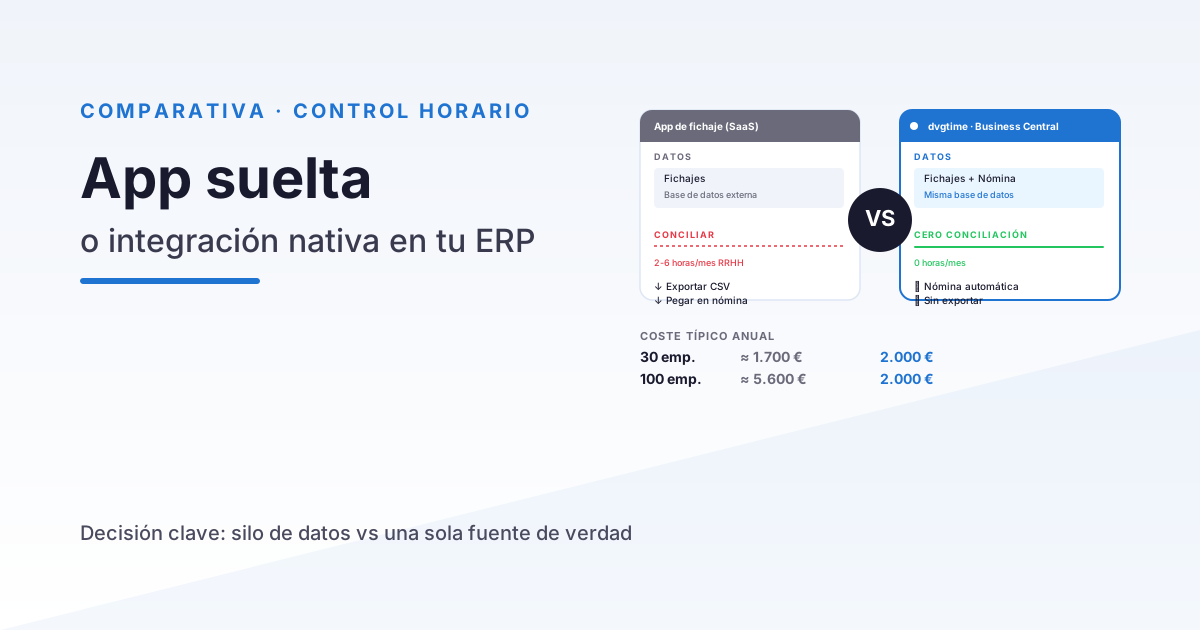
Time Tracking App vs Integrated Time Control in Your ERP
A practical comparison between generic time tracking apps (Sesame, Bizneo, Personio) and time control integrated in Business Central. When to choose each option.
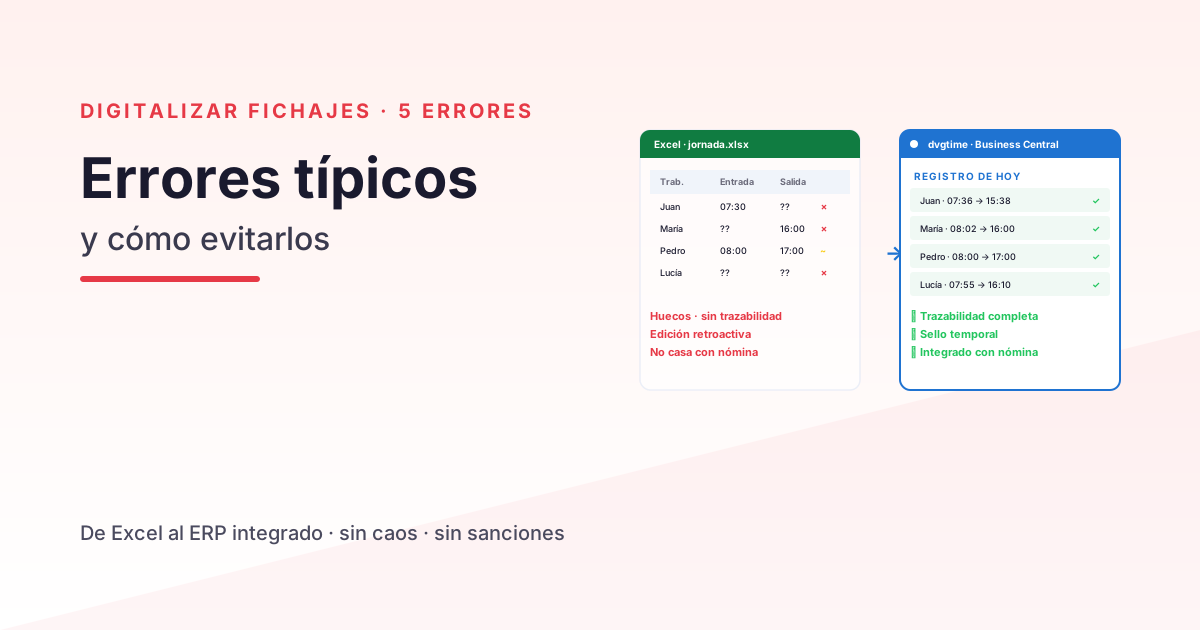
Digitalising Time Tracking in Your Company: 5 Common Mistakes
The 5 most common mistakes when digitalising time tracking in a Spanish SME — and how to avoid them. An operational guide for HR and operations management.
Fracttal, Maximo & Mainsaver vs dvgmao: CMMS in BC
Top CMMS platforms (Fracttal, Maximo, Mainsaver, MaintainX) compared with dvgmao, the native Business Central option. When each one fits.