Time Tracking App vs Integrated Time Control in Your ERP
A practical comparison between generic time tracking apps (Sesame, Bizneo, Personio) and time control integrated in Business Central. When to choose each option.
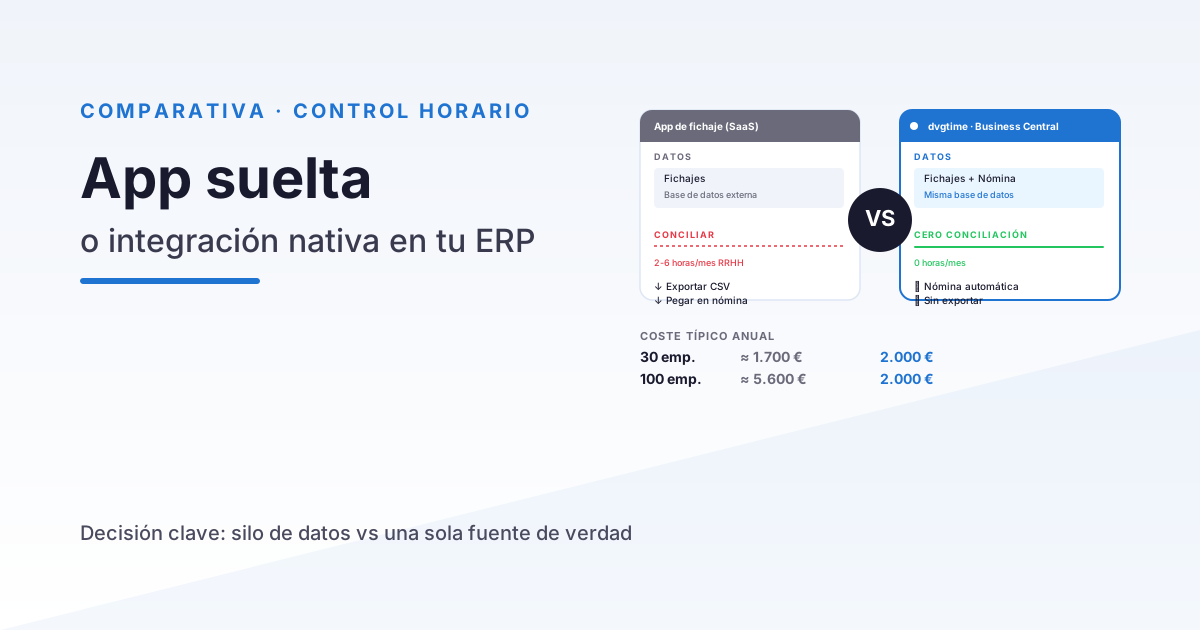
When the time comes to digitise time tracking, most SMEs face the same decision: buy a generic time tracking app (Sesame, Bizneo, Personio, Factorial, etc.) or integrate time tracking into their ERP?
There is no universal answer. The right choice depends on 3 specific factors: your current ERP, the size of your workforce, and how your HR team operates. This guide is a practical comparison between both models, with a recommendation for each scenario.
The two options in a nutshell
- Generic time tracking app: a SaaS product your company contracts separately. It lives on its own server with its own database and connects to your ERP via API or export.
- dvgtime: a Spanish SaaS workforce management and time-tracking tool that works on its own (browser, mobile PWA app, and kiosk, with no ERP required) — the same convenience as generic apps — and, if you use an ERP, connects natively and optionally to Microsoft Dynamics 365 Business Central or other ERPs (Sage, SAP…) via connector. When connected to Business Central, clock-in data shares the same environment as payroll, contracts, and project allocations, without the fragile connector generic apps depend on.
Structured comparison: axis by axis
These are the 8 axes that truly matter in a purchasing decision, with a winner for each one:
| Decision axis | Generic time tracking app | dvgtime (SaaS; native with BC or other ERPs if you use them) | Winner |
|---|---|---|---|
| 1. Employee experience | Excellent, highly polished UX | More understated, but fully functional | Generic app |
| 2. Payroll connectivity | Export or API · 2–8 HR hours/month | Connected to BC: same environment · 0 hours | dvgtime (with ERP) |
| 3. Hour allocation to projects | Separate system · double entry (attendance + project) | A single entry counts as both | dvgtime |
| 4. Traceability and compliance (RD-ley 8/2019) | Compliant if configured; data depends on your subscription tier | Compliant by default; with BC, data continuity guaranteed | dvgtime |
| 5. Scalability and price | Per user (€2–5/user/month) | Per tenant, fixed (~€2,000/year) | dvgtime (>50 employees) |
| 6. Shifts, collective agreements, and calendars | Standard coverage fine; complex scenarios require a higher-tier plan or remain limited | Rotating shifts, collective agreements, and regional calendars included as standard | dvgtime |
| 7. Mobile and on-site work | Native app, very good UX | Mobile app (PWA) + kiosk + geolocation | Tie |
| 8. Support and data sovereignty | Lock-in: data lives in their database | Connected to BC, data lives in your Business Central — fully portable | dvgtime (with ERP) |
Looking for a head-to-head with a specific vendor? We have the dedicated comparison: Sesame vs dvgtime.
Cost by workforce size
The axis that changes most with scale is price: the generic app charges per user, while the integrated system applies a flat per-tenant fee.
| Workforce | Generic app (approx.) | dvgtime (approx.) |
|---|---|---|
| 30 employees | ~€1,500/year | ~€2,000/year |
| 100 employees | ~€5,000/year | ~€2,000/year |
| 200 employees | ~€10,000/year | ~€2,000/year |
From 50 employees onwards, the integrated model is between 2 and 5 times cheaper.
Executive summary
| Scenario | Recommendation |
|---|---|
| Company of 5–20 employees · no ERP | Generic app or dvgtime standalone |
| Company of 5–30 employees · with Business Central | dvgtime (native with BC) |
| Company of 30–100 employees · with Business Central | dvgtime (native with BC) |
| Company of 100+ employees · any ERP | dvgtime (native with BC, via connector with other ERPs) |
| Highly complex company (shifts, collective agreements, multi-site) | dvgtime |
| Company with a very junior HR profile | Generic app (more polished UX) |
| Company with a technically mature HR manager | dvgtime |
Why dvgtime is the best choice if you already use Business Central
One thing worth clarifying upfront: dvgtime works standalone (browser, mobile PWA app, and kiosk) with no ERP required, just like a generic app. The Business Central integration is an optional add-on. That said, if your company already runs on Microsoft Dynamics 365 Business Central, dvgtime brings three advantages no generic app can match:
Advantage 1 · Per-tenant pricing, not per user
€2,000/year per tenant (the entire workforce included). A generic app costs between €720 (15 employees) and €10,000 (200 employees). From 50 employees onwards, dvgtime is between 2x and 5x cheaper.
Advantage 2 · Zero payroll reconciliation
The clock-in data is already inside the same Business Central as payroll. HR saves between 2 and 8 hours a month on reconciliation — plus 100% of copy-paste errors.
Advantage 3 · Data sovereignty
Your data lives in YOUR Business Central. If you ever change Microsoft partner (or extension) in the future, the data is still there. With a generic SaaS app, cancelling the subscription means losing access to your data (or paying for a special export).
When NOT to choose dvgtime
To be honest:
- If you don’t use any ERP and have no plans to adopt one, dvgtime is still valid in standalone mode, but you won’t take advantage of its biggest differentiator (native integration); in that case it competes head-to-head with any generic app.
- If your workforce is very small (<10) and everyone works on-site, the fixed cost of €2,000/year may not be justified compared to €720 for a generic app.
- If you prioritise the app’s UX over integration (because your workforce profile demands it), a generic app like Sesame or Personio may have the edge.
Shall we talk?
If you are evaluating a time tracking app against an ERP-integrated system, book a free session with a Davisa consultant. In 30 minutes we’ll help you decide which option fits your specific situation best (without upselling you something you don’t need — if a generic app is the right call, we’ll tell you so).
To dig deeper: Mandatory time tracking in your company: how to comply with Business Central, Digitalising clock-ins: 5 common mistakes to avoid and discover dvgtime.
Artículos relacionados
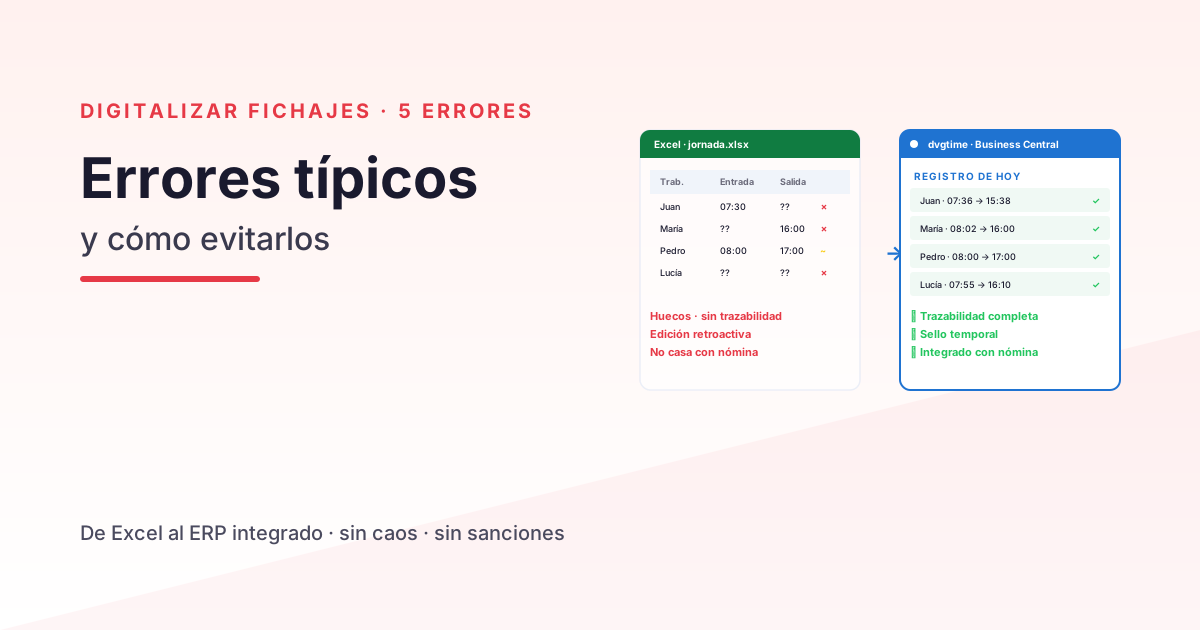
Digitalising Time Tracking in Your Company: 5 Common Mistakes
The 5 most common mistakes when digitalising time tracking in a Spanish SME — and how to avoid them. An operational guide for HR and operations management.
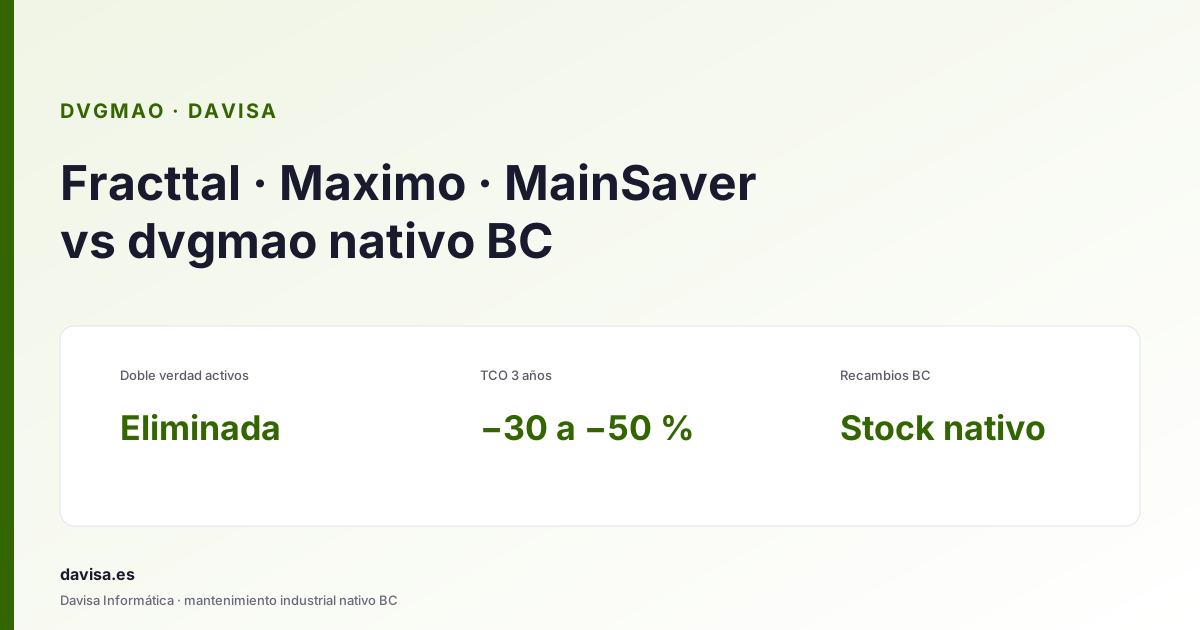
Fracttal, Maximo & Mainsaver vs dvgmao: CMMS in BC
Top CMMS platforms (Fracttal, Maximo, Mainsaver, MaintainX) compared with dvgmao, the native Business Central option. When each one fits.
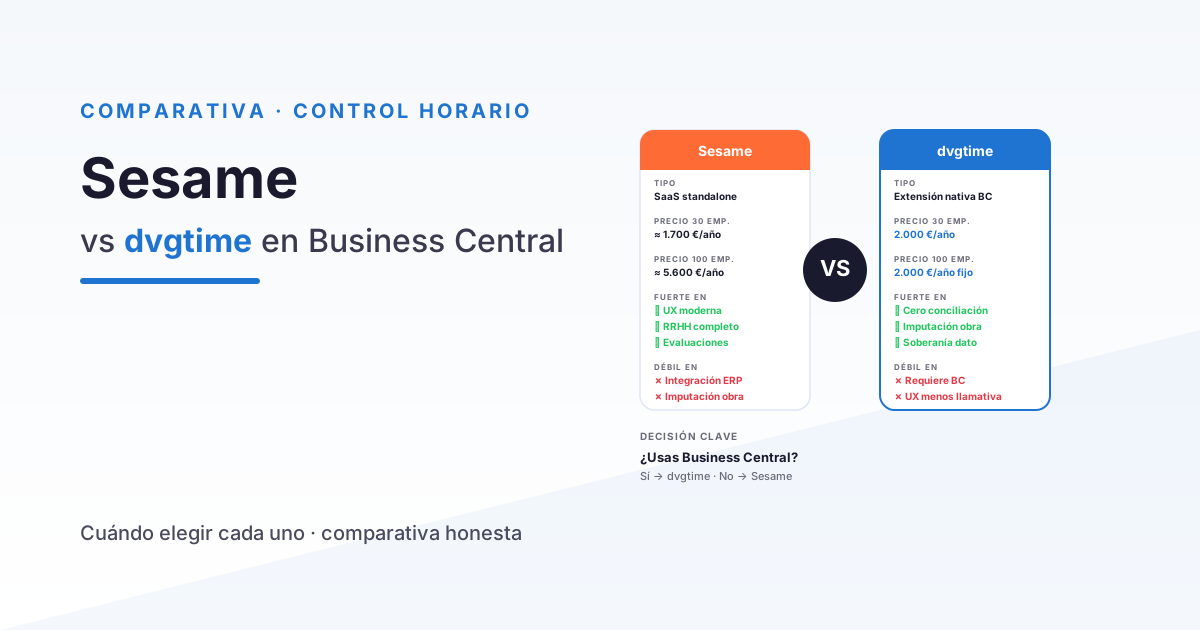
Sesame vs dvgtime: which time-tracking tool to choose if you use Business Central
A practical comparison between Sesame HR and dvgtime for companies using Microsoft Dynamics 365 Business Central. Features, pricing, and integration.