Sesame vs dvgtime: which time-tracking tool to choose if you use Business Central
A practical comparison between Sesame HR and dvgtime for companies using Microsoft Dynamics 365 Business Central. Features, pricing, and integration.
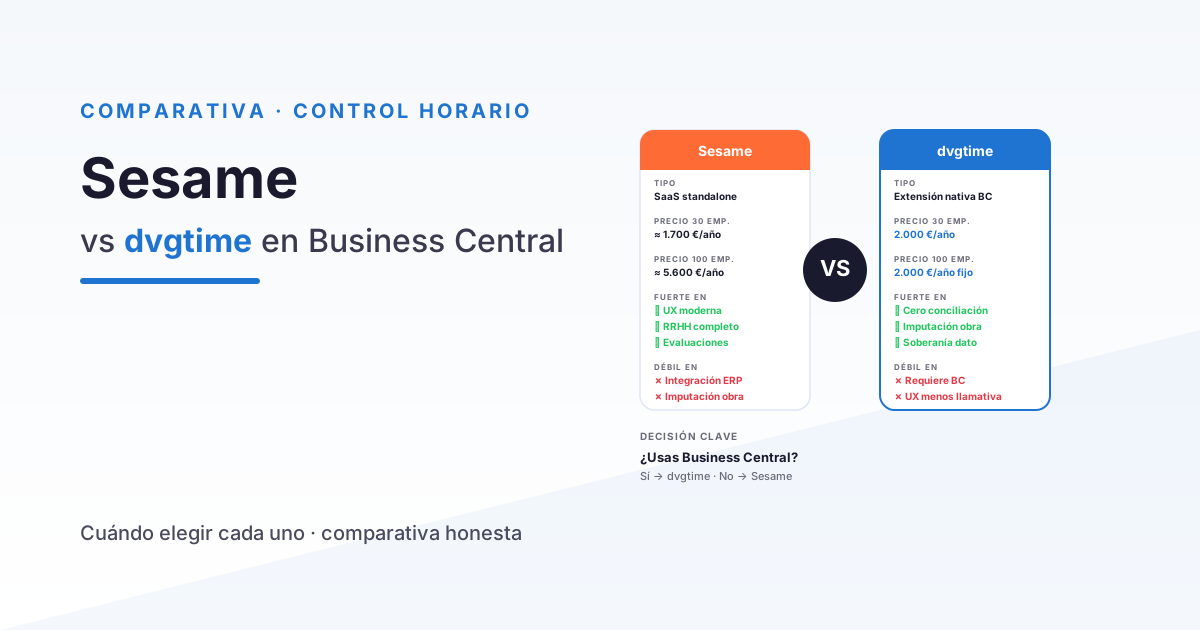
If you are looking for a time-tracking system in Spain, Sesame HR is very likely one of the first names you come across. And if your company uses or is considering Microsoft Dynamics 365 Business Central, dvgtime surfaces as a specialised alternative. This guide is a practical, no-marketing comparison between the two, focused on the criteria that actually matter when making a real purchasing decision.
Declared conflict of interest: Davisa develops dvgtime. Even so, this comparison aims to be honest — there are scenarios where Sesame is the better choice, and we say so.
What each product is in one sentence
- Sesame HR: multi-tenant SaaS with a modern interface covering the full HR lifecycle (time clocking, absences, performance reviews, onboarding, document management).
- dvgtime: a Spanish SaaS platform for workforce management and time registration that works standalone — via browser, mobile app (PWA), and kiosk, with no ERP required — and that, optionally, connects natively to Microsoft Dynamics 365 Business Central or, via connector, to other ERPs (Sage, SAP…). It centralises time tracking, clock-ins, breaks, and incidents.
The structural difference is not whether they are SaaS — both are, and both work standalone — but rather how they integrate with your ERP when you use one: Sesame connects to your ERP through an external connector; dvgtime offers an optional native integration with Business Central (or other ERPs via connector), without the brittle connectors that come with generic apps.
Head-to-head comparison
These are the axes that drive a real purchasing decision, with the winner in each category:
| Decision axis | Sesame HR | dvgtime | Winner |
|---|---|---|---|
| Employee experience | Excellent, highly polished UX | Functional, less flashy | Sesame |
| HR features (reviews, onboarding, document management) | Full HR suite | Time clocking and hours; the rest via Business Central | Sesame |
| Payroll integration | Connector or export · 2–6 HR hours/month | Same environment · 0 hours | dvgtime |
| Hour allocation to projects / job sites | Limited (via add-on) | Native | dvgtime |
| Shifts, collective agreements, and calendars | Configurable | Configurable + Business Central standard | Tie |
| Data ownership | Data on Sesame’s servers · medium-high lock-in | Data in your Business Central · portable | dvgtime |
| Support and ecosystem | Direct manufacturer · large community (10k+ clients) | Close Microsoft partner who knows your business | Mixed |
Pricing by workforce size
Sesame charges per user; dvgtime uses a flat fee per tenant. This is the difference that widens most as headcount grows:
| Employees | Sesame (estimated annual) | dvgtime (annual) |
|---|---|---|
| 15 | ≈€900 | €2,000 |
| 30 | ≈€1,700 | €2,000 |
| 50 | ≈€2,800 | €2,000 |
| 100 | ≈€5,600 | €2,000 |
| 200 | ≈€11,000 | €2,000 |
Winner: Sesame below 30 employees; dvgtime clearly above 50.
Executive summary · When to choose each one
Choose Sesame HR if:
- Your company does not use Business Central (and has no plans to migrate).
- You have fewer than 30 employees and the per-user cost works out well.
- You want a single tool for all HR needs (time clocking + reviews + onboarding + documents).
- Your workforce is young and values modern mobile UX.
- You have a dedicated HR team that can handle payroll exports manually.
Choose dvgtime if:
- Your company already uses Business Central (or is implementing it alongside dvgtime).
- You have more than 50 employees (better cost scaling).
- You need to allocate hours to projects / job sites (engineering, consulting, construction, manufacturing).
- You value native payroll integration with no intermediate reconciliation.
- You want data ownership (data lives in your BC, not in an external SaaS).
- Your HR team is small and prefers automation over a “pretty” interface.
And an in-between scenario
If your company already has Sesame in place and is planning to migrate to Business Central, there is no need to switch time-tracking tools immediately. Sesame does integrate with BC via connector. It makes sense to evaluate the move to dvgtime when you reach 50+ employees or when you notice that reconciling Sesame and BC is consuming more time than it saves.
Real case — total cost over 3 years for a company with 80 employees
Software decisions should not be measured by the first-year price but by the total cost of ownership (TCO) over 3–5 years. For a Spanish industrial company with 80 employees already running Business Central:
| Item | Sesame (estimated) | dvgtime |
|---|---|---|
| Year 1 subscription | ≈€3,800 | €2,000 |
| Year 2 subscription | ≈€4,000 | €2,000 |
| Year 3 subscription | ≈€4,200 | €2,000 |
| Initial onboarding | €0–800 | €800 |
| BC connector (annual) | €600–1,200 | Included |
| HR payroll reconciliation time (3 years) | ≈€4,000 | ≈€0 |
| Total cost over 3 years | ≈€16,500–19,000 | ≈€6,800 |
The gap widens as the workforce grows. This table does not include the most expensive hidden cost: the payroll error discovered two months later because synchronisation failed. In companies with native reconciliation, that error simply does not exist.
When the Sesame vs dvgtime debate is the wrong debate
There is a scenario worth acknowledging: if your company has not yet decided on an ERP, the time-tracking conversation is premature. The right move is to choose the ERP first (Business Central or another) and then pick the time-registration tool that best fits that decision. Davisa has been implementing Microsoft Dynamics 365 Business Central since 2003 (when it was still NAV), and we keep seeing the same pattern: companies that choose Sesame because it is trending, then migrate to BC two years later and find that the integration work costs more time than it saves. The clean sequence is ERP first, satellite tools after.
Want to talk it through?
If you are evaluating Sesame against dvgtime, or you already have Sesame and want to understand whether switching makes sense, book a free session with a Davisa consultant. We run a quick audit (what ERP do you use? how many employees? what workforce profile?) and give you an honest answer about which tool fits. If that answer is Sesame, we will tell you.
To go deeper: Time-clocking app vs integrated ERP time control, Mandatory time registration in Business Central and discover dvgtime.
Artículos relacionados
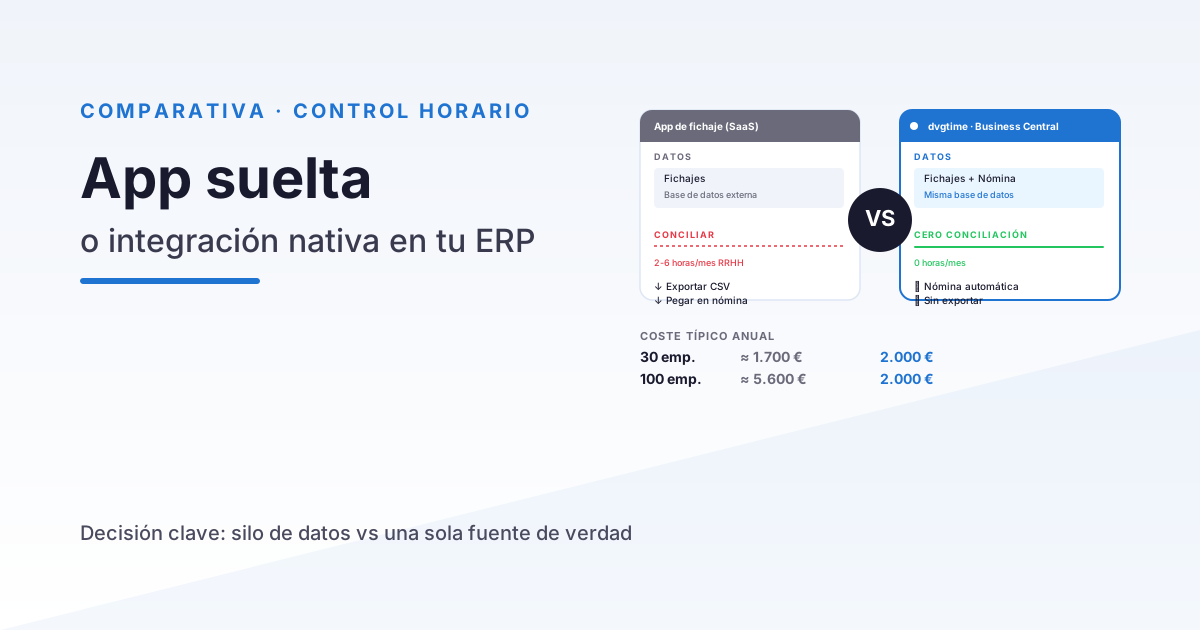
Time Tracking App vs Integrated Time Control in Your ERP
A practical comparison between generic time tracking apps (Sesame, Bizneo, Personio) and time control integrated in Business Central. When to choose each option.
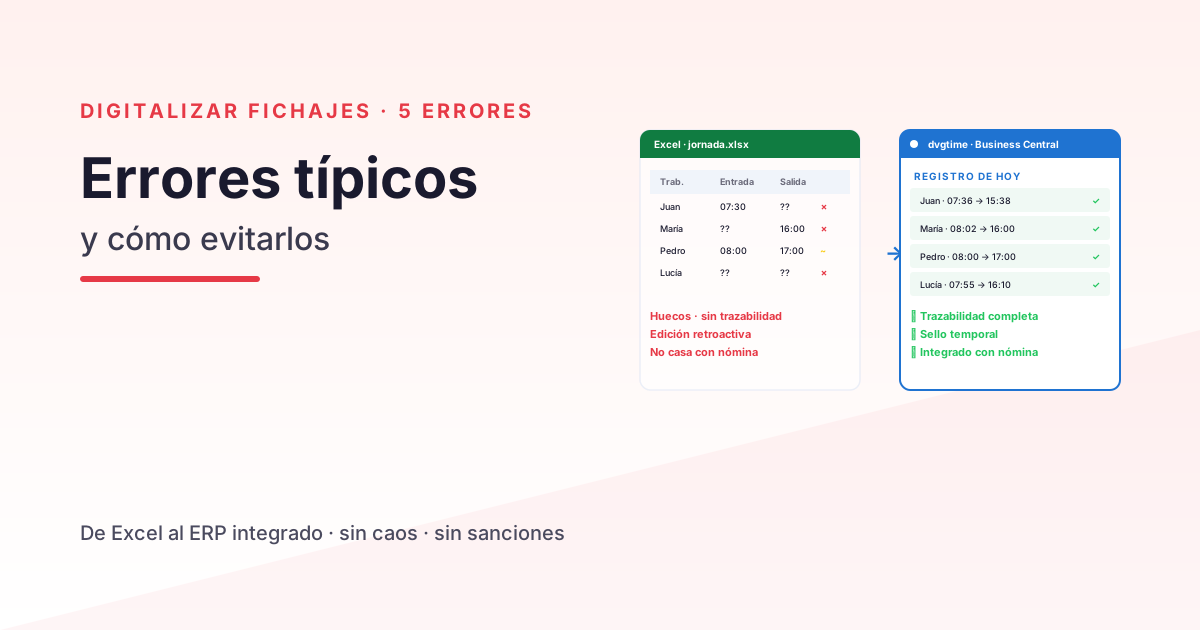
Digitalising Time Tracking in Your Company: 5 Common Mistakes
The 5 most common mistakes when digitalising time tracking in a Spanish SME — and how to avoid them. An operational guide for HR and operations management.
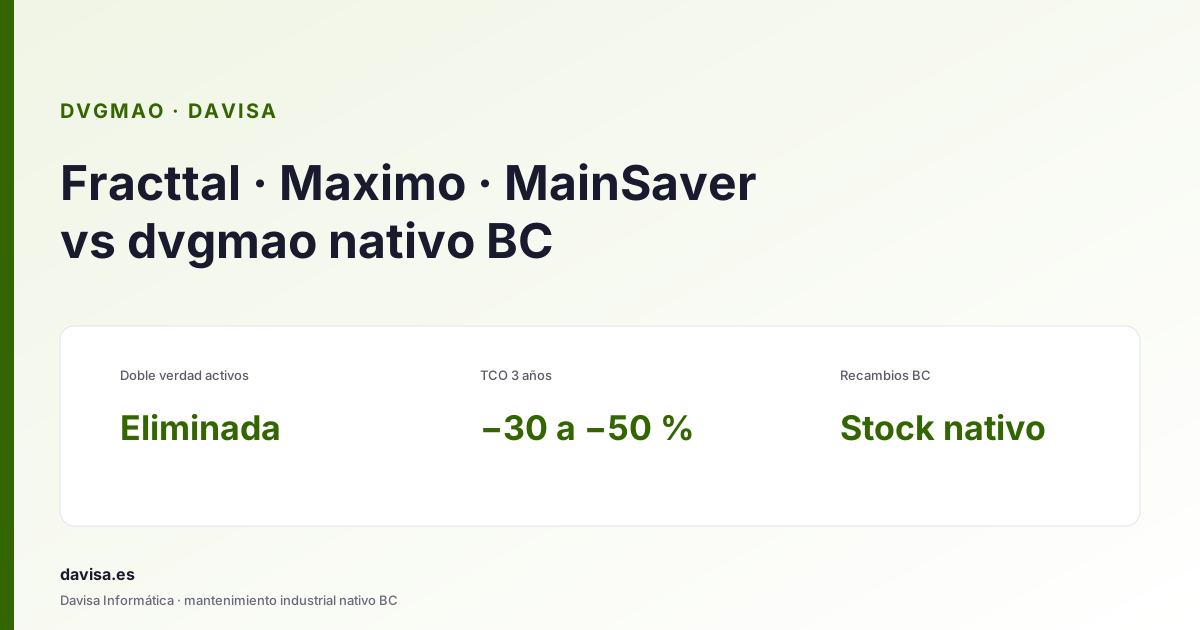
Fracttal, Maximo & Mainsaver vs dvgmao: CMMS in BC
Top CMMS platforms (Fracttal, Maximo, Mainsaver, MaintainX) compared with dvgmao, the native Business Central option. When each one fits.