
Penalties for Non-Compliance with Working Time Records (2026)
What fines apply when you fail to keep mandatory working time records: amounts per workplace, serious infringements, and how to avoid Labour Inspectorate sanctions.
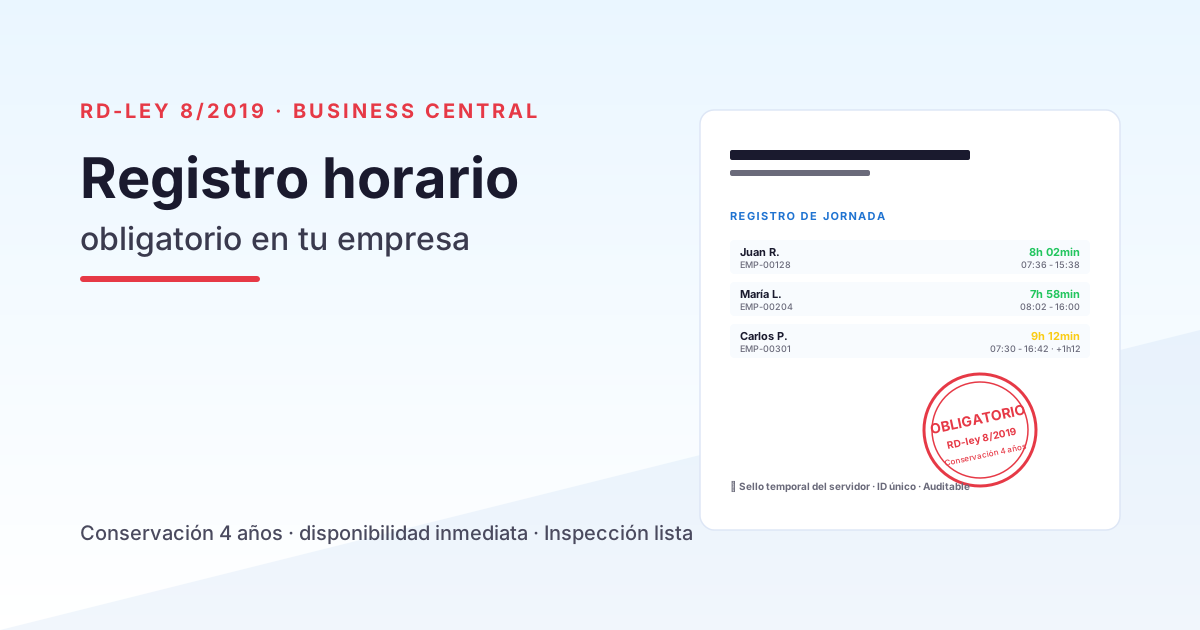
Failing to keep working time records — or keeping them incorrectly — is no minor oversight: it is a serious infringement that the Labour Inspectorate penalises with fines calculated per workplace, and those fines can escalate when multiple employees are affected. This article covers the reference amounts, why an inspection can happen more easily than you think, and how to stay on the right side of the law.
Stay ahead of the fine. dvgtime logs working hours daily and maintains the tamper-proof history the Labour Inspectorate will ask for. See a demo.
A Serious Labour Law Infringement
The Spanish Law on Infringements and Sanctions in the Social Order (LISOS) classifies the absence or irregular keeping of working time records as a serious infringement. This covers not having a record at all, keeping one that is incomplete, failing to retain records, or tampering with them. We are not talking about a best-practice recommendation: this is a legal obligation, and non-compliance carries direct financial consequences.
Reference Fine Amounts
Serious infringements fall — depending on the band (minimum, medium, or maximum) — within a range of approximately €751 to €7,500 per workplace. The specific band is determined by factors such as intent, the number of employees affected, and repeat violations. Key points to bear in mind:
- The fine is applied per workplace, not per company: multiple locations mean the figure multiplies.
- A single investigation can pile on additional related infringements (working hours, unpaid overtime), pushing the total higher.
- Repeat violations push the case toward the maximum band.
Exact amounts are updated by regulation; treat these figures as a guide and always confirm the current amounts with your legal or HR advisor.
The fine is only part of the cost. Without time records, you also lose your evidence in any overtime or working hours dispute — silence works against you.
Why an Inspection Is Easier to Trigger Than You Think
Working time record compliance is a standing priority for the Labour Inspectorate, and audits can be triggered by an employee complaint, scheduled enforcement campaigns, or as a follow-on from another inspection. When inspectors arrive, their request is always the same: show me the daily working time records for the past four years. If you do not have them, or they exist only as loose sheets that anyone could have edited, the problem is already there.
What Inspectors Will Ask For
- A daily record of the start and end of each shift, per employee.
- Records retained for four years and available to staff and their representatives.
- A reliable and unalterable record: one that cannot be modified after the fact without leaving a trace.
We cover the full regulatory requirement in mandatory working time records in Spain (Art. 34.9).
How to Avoid It with dvgtime
The way to stop worrying about an inspection is straightforward: get the records right from the start. dvgtime, the workforce management platform from DAVISA INFORMÁTICA, logs actual working hours for each employee via mobile, kiosk, or web, and maintains a tamper-proof, fully auditable history for as long as the law requires. When the Inspectorate comes knocking, exporting the records takes seconds — not a scramble. And if you work within the Microsoft ecosystem, everything integrates seamlessly with Business Central — no duplicate data entry.
This information is general in nature and does not constitute legal advice; consult your legal or HR advisor for guidance on your specific situation.
Sleep easy when an inspection comes. We will show you how dvgtime keeps your working time records penalty-proof. Request a demo.
Further Reading
Artículos relacionados
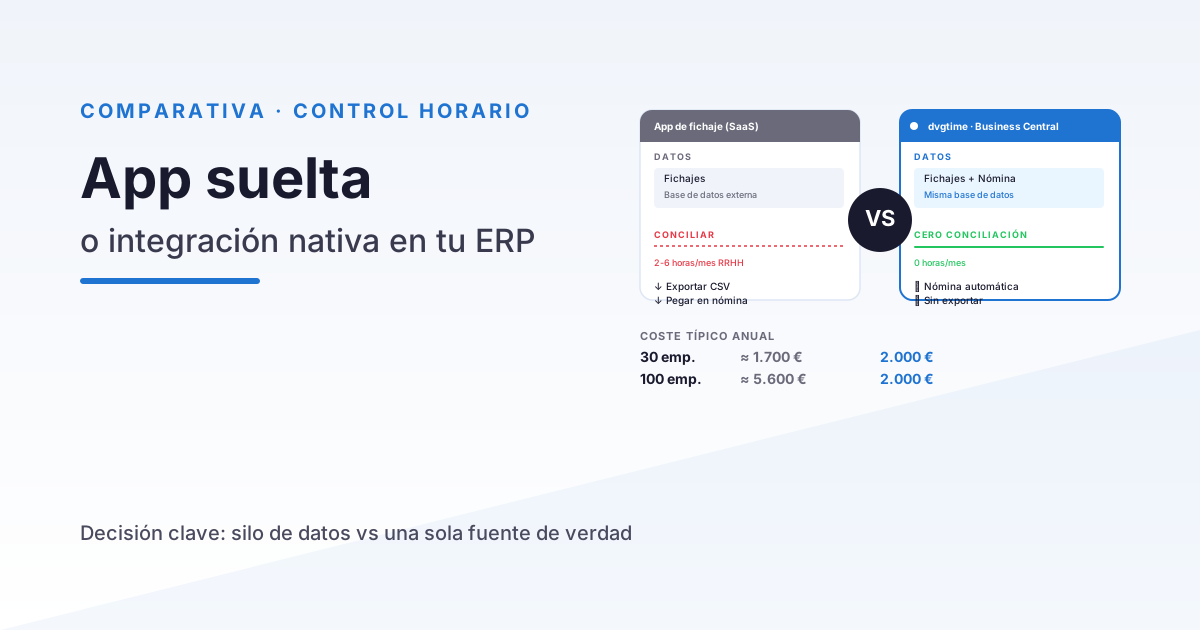
Time Tracking App vs Integrated Time Control in Your ERP
A practical comparison between generic time tracking apps (Sesame, Bizneo, Personio) and time control integrated in Business Central. When to choose each option.
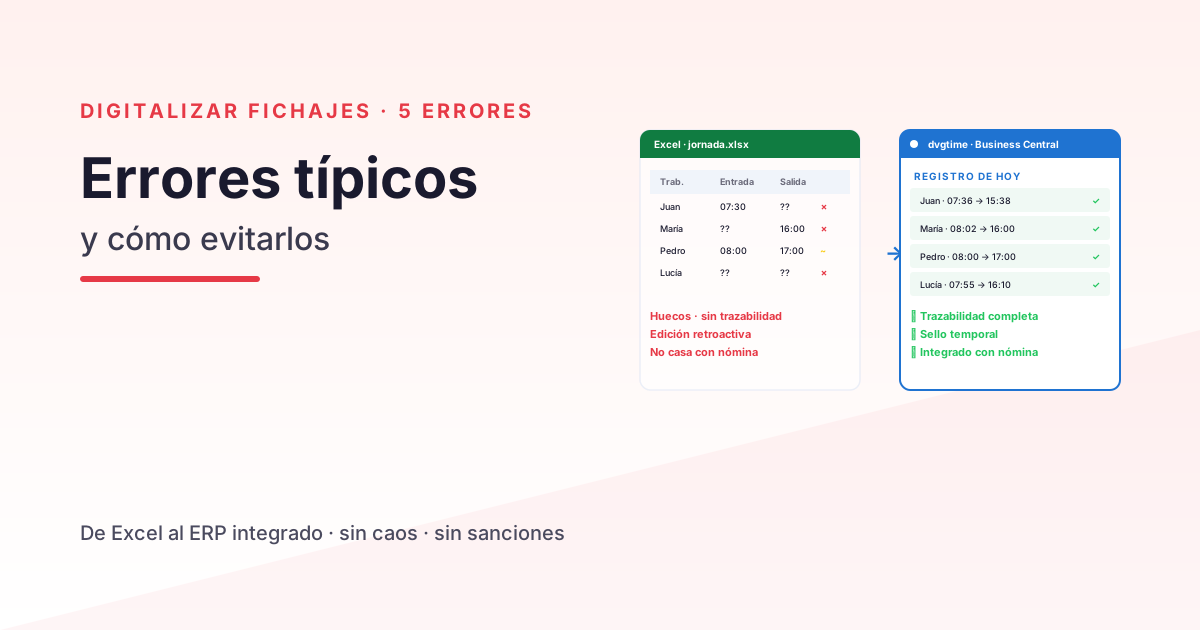
Digitalising Time Tracking in Your Company: 5 Common Mistakes
The 5 most common mistakes when digitalising time tracking in a Spanish SME — and how to avoid them. An operational guide for HR and operations management.
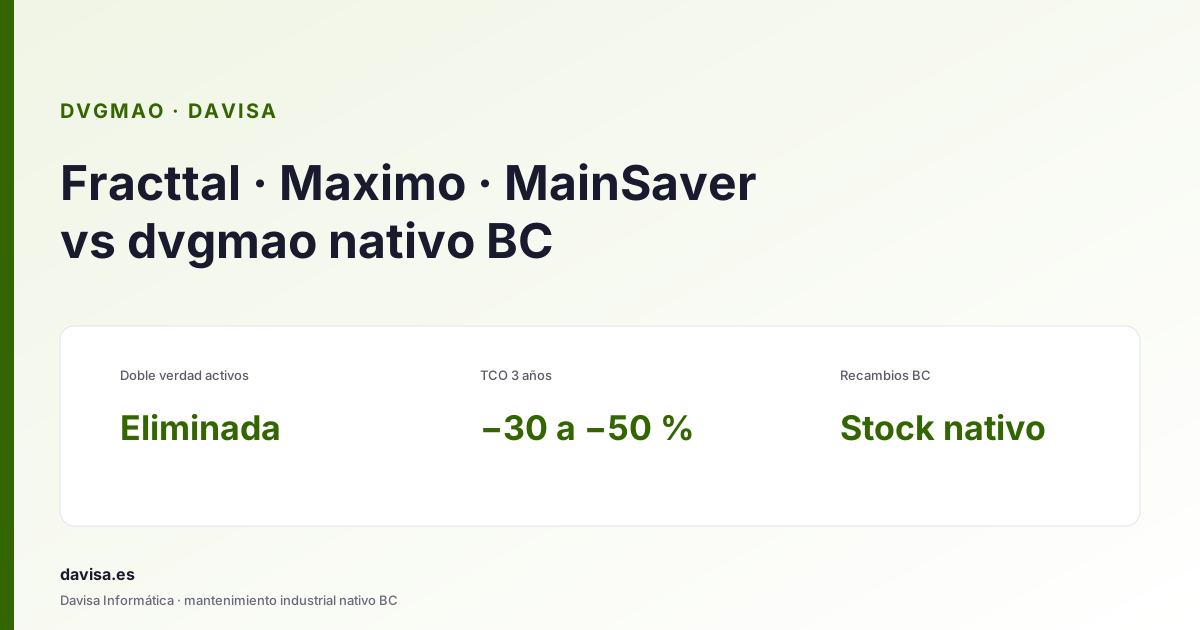
Fracttal, Maximo & Mainsaver vs dvgmao: CMMS in BC
Top CMMS platforms (Fracttal, Maximo, Mainsaver, MaintainX) compared with dvgmao, the native Business Central option. When each one fits.